

Editor’s Note: We are co-hosting the Mercier Lecture on September 29 with York University's Schulich School of Business, featuring a keynote by Xanadu founder Christian Weedbrook. Limited spaces are still available.
🎯 Three-Shot Burst
From soup cans to qubits. Xanadu is turning the former Campbell’s Soup factory in Etobicoke into a 158,000 square foot photonics manufacturing hub, backed by a $195M repayable federal loan out of the Strategic Response Fund, which is half of the up to $390M the company had asked for against its $893M Project OPTIMISM.
The cheque is one brick in a “Canadian Investment Supercycle”, as TD Economics now counts more than $1T announced across 300 plus projects with $1.5T to $1.7T in potential and roughly $12,000 more real output per capita by 2035, while on the defence side Ottawa has stacked $60B in extra spending over five years, more than half a trillion in investment, 125,000 jobs and a stated goal of tripling the industry inside a decade.
Plumbing is moving too: the industrial benefits program shifts from ISED to the Defence Investment Agency (DIA), a change ex-public servants call a “big deal” for procurement speed on a program worth $5B plus in GDP and 40,400 jobs a year.
Reality check: Doug Guzman is expected to step down after only a year as the first chief executive of the DIA. Guzman was the agency’s answer to every question about whether Ottawa could actually move money at speed. Losing your first CEO inside 12 months, while handing that same agency the industrial benefits program and a 5 percent of GDP target for 2035, is not a personnel story.
We have been here before, and the sharpest read of why nothing compounds is the reminder that DATAR put a working naval tactical data system in Canadian hands in 1949, a decade ahead of anyone, and we let it go, with the verdict that the system “is not broken, it is working exactly as designed.” Founders are reaching the same conclusion faster, arguing that sovereignty is now a shippable product feature rather than a marketing coat of paint, verified the way security claims are verified, after 50 percent US tariffs hit $28B of Canadian goods in a single weekend and seed funding fell 16 percent to $297.2M across 133 deals.
Valued at 32x, acquired at 3x. From Backswing Ventures - Helsing’s $1.8B secondary at an $18B valuation is roughly 32 times projected 2026 revenue, while the median defence tech M&A multiple sits at 2.8x and public comps at 2.2x, and the AEVEX sale to BlackSea at $650M max on about $150M of FY2026 revenue works out to 4.3x, which is the exit math almost nobody is underwriting.
“The cap table doesn’t validate the valuation, revenue does.” - Kyle Asman
Meanwhile private markets keep climbing, with Castelion raising a $1B Series C at a $13B valuation four years after founding, making it the third most valuable venture-backed defence company behind Anduril at $61B and Helsing at $18B, a round split into $800M of equity and $250M of credit while the Army’s Dark Eagle produces about one missile a month and Castelion books a $90M Navy award for 50 hypersonic weapons.
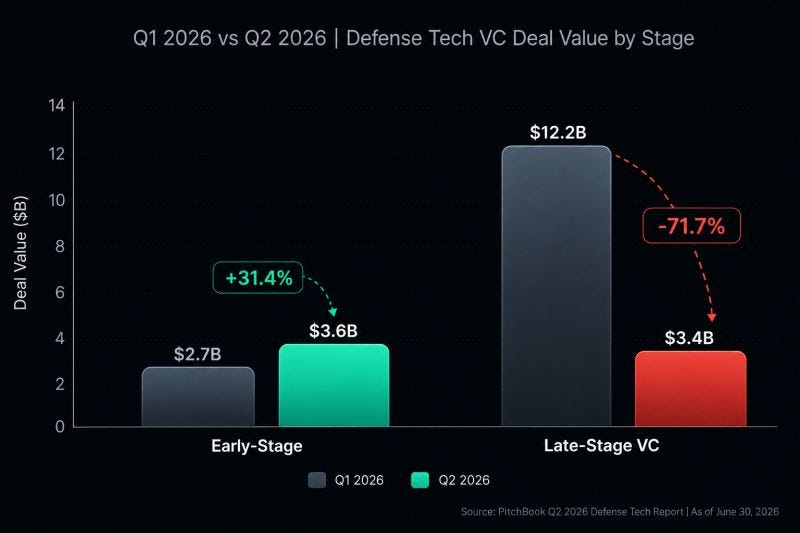
Reality check: The exit window did crack open, with aerospace and defence private equity exit value hitting $26.8B in H1 2026 against $17.7B for all of 2025 and five listings versus zero in Q2 2025, even as deal value slid to $6.5B from $11.1B, which is liquidity for sponsors sitting on $860B of aging buyout NAV rather than proof that venture-scale marks clear. The margin question is the one to watch, because the White House has made fixed-price contracting the default and preferred method while the FY26 NDAA lifted the certified cost data threshold from $2M to $10M, traditional primes earn 7 to 15 percent where Anduril claims roughly 40 percent on mature products, and Jordan Blashek’s warning of a reckoning inside 18 months sits against roughly $50B of venture chasing $4.3B in actual federal obligations.
PitchBook’s own quarterly read sharpens the picture, with aerospace and defence deal count up nearly 11 percent from Q1 and more than double a year earlier while total deal value fell almost 58 percent, and five of the 10 largest exits arriving as public listings alongside Norwegian’s roughly $840M purchase of Sunclass and Voyager’s $300M pickup of Astrobotic. More deals, smaller cheques, is how a market behaves when it stops believing the last round’s price.

Twelve submarines, eight months, and a procurement culture in the middle of a personality change. TKMS says the pace of Canada’s submarine decision was “lightspeed,” with up to 12 boats, a 100,000 page contract, roughly 50 TKMS staff on the file, negotiations targeted to close by year-end and a first boat as early as 2033, plus a Canadian supplier bench that already includes CAE on training, E3 Lithium on critical minerals, Valbruna ASW on amagnetic steel and Cohere on AI. The follow-on fight is surface, where a 12 to 20 ship corvette class of 100 to 120 metres for three oceans has Seaspan, Vard, Ontario Shipyards and Thales Canada circling MEKO A-100 and Luleå-class designs and Vice-Admiral Topshee wants the answer “Canadian from the core.”
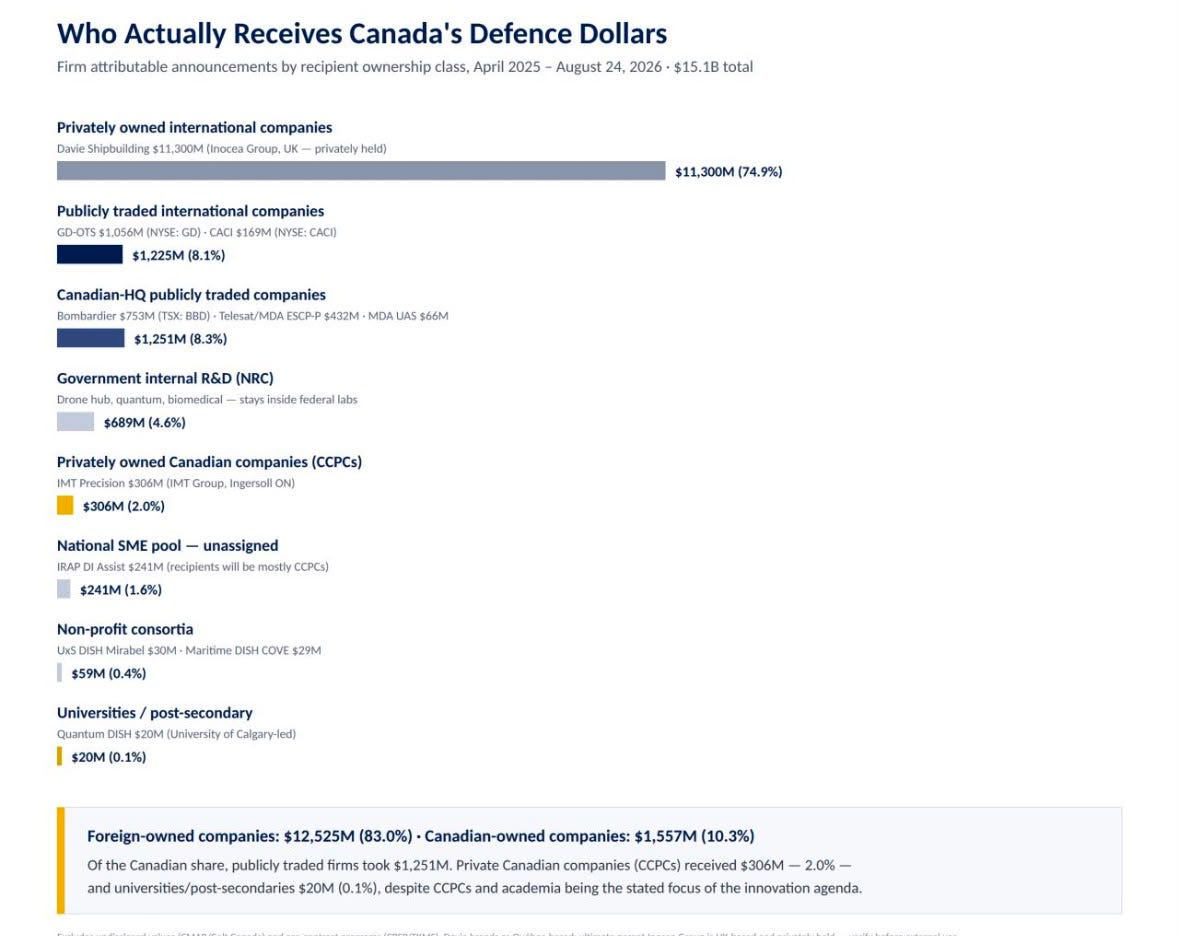
That is the same logic pulling procurement away from Washington, with Stephen Fuhr saying the 88-jet F-35 buy remains under review with only 16 aircraft firmly ordered and critical equipment being paid for on 14 more, while sources float a mixed fleet of more than 100 F-35s and Gripens and Telesat takes $2.3B for Arctic military satellite communications, a notable turn given roughly 70 percent of Canadian defence dollars historically flowed south. Fuhr’s own framing of the politics is “that’s just me reading the room.”
Reality check: The money argument is nearly settled and the hard part is what comes next, since the NATO pledge splits into 3.5 percent military and 1.5 percent infrastructure by 2035 and even the UK only promises 3 percent “sometime in the next Parliament” on about £15B over four years, which is a reminder that pledges are easy and delivery schedules are not.
Procurement usually slows down in the summer… But Canada saw nine tenders for drones in the past week, the most on record.
ADVERTISEMENT

Secure your spot here.
🤝 Deal Corner
🍁 Nalagx Corp picks New Brunswick for an explosives plant that could double NATO’s supply. The company secured roughly 1,500 acres of provincial land near Belledune, beating out two US states, for a facility CEO Patrick Gagnon says would double NATO’s explosives supply, with Natural Resources minister John Herron backing the site. Energetics are the bottleneck behind every artillery pledge, so this is the least glamorous and most useful announcement of the week.
Big congrats to Rob O’Donnell, currently serving as the Canadian Liaison Officer with the U.S. Army Transformation and Training Command (T2COM) HQ in Austin, Texas. His work focuses on bridging interoperability and collaboration efforts between Canada and the US and emerging military modernization initiatives in the fields of AI, Robotics, Autonomy as well as Futures Concepts.

🍁 NordSpace lands $10M for the Atlantic Spaceport Complex. Ottawa, Newfoundland and Labrador and the company are putting $10M total into SLC-02 at St. Lawrence on the Burin Peninsula, with roughly half NordSpace’s own capital and half public money announced August 27 by Sean Fraser and Lin Paddock through ACOA as a space and defence play for the province.
Space tech VC funding hits $11.3 billion in H1 2026, surpassing all of 2025
🍁 MDA Space launches LaunchPad Ventures across 25 focus areas. The new vehicle, run with 49North as a subsidiary and covering 25 focus areas backed by 55 years of MDA relationships, does not disclose its size, which puts it beside the $100M CAD Calian Ventures fund with a different pitch. Shawn Roy names the real gap: the barrier for Canadian defence SMBs “isn’t talent or technology, it’s access to customers, to networks, and revenue opportunities.”
🍁 Lab2Market puts $10,000 each behind 10 dual-use student ventures. Dalhousie, UNB and Vimy Forge are running Canada’s first national dual-use cohort, 16 weeks this fall with 10 ventures and a landing at DEFSEC Atlantic 2026, including Reliable Arctic Intelligence, counter-drone startup SkyRelix, Novigrad Technologies, Volantek and Maritime Trust Assurance.
🍁 Canada is negotiating a €100B defence bank that has raised €5B. The Defence, Security and Resilience Bank has about €5B in upfront commitments against a €100B target, nine countries signed up or supportive, a €20B paid-in and €80B callable structure and an ambition to be rated AAA, with Canada’s Isabelle Hudon as lead negotiator and a charter signing planned for the autumn.


REGENT raises $240M for seagliders the Marine Corps keeps re-upping. The Series B is a 50-50 equity and debt mix taking total funding past $340M, behind a 255,000 square foot plant, a reported $10B order book and a defence Viceroy variant carrying 3,500 lb at up to 180 mph, on top of a $4.75M Marine Corps Warfighting Lab agreement in 2023 and a $10M follow-on in 2025. REGENT claims a 40 percent improvement in theatre-setting timelines in war games, with programs of record targeted for 2029.
In-Q-Tel’s small cheque helped build an $8B German drone champion. Quantum Systems co-CEO Sven Kruck credits the CIA-backed investor, whose cheques are often under $3M, with opening the doors that made CIA and FBI business possible for a company now valued around $8B, while the European Parliament’s Marie-Agnes Strack-Zimmermann warns that IQT “is not a purely financial investor.”
Army commits up to $2.2B to five nuclear microreactor vendors. The Janus program pairs Antares with Fort Bragg, BWXT with Fort Campbell, General Atomics EMS with Fort Hood, Radiant with Fort Benning and Westinghouse with Fort Drum, worth up to $2.2B across FY2027 to FY2031, targeting 20 plus reactors with the first online by September 2028 under Executive Order 14299 after nine bases made the November shortlist.

Ursa Major goes public at roughly $2.3B post-money via SPAC. The propulsion company is merging with Bleichroeder Acquisition Corp III to form Inflection Point Mach X Bleichroeder Corp under ticker IPXX in Q1 2027, at about $1.6B pre-money with $350M plus in PIPE commitments, against roughly $380M raised to date, 5,500 plus ground tests, 140,000 test seconds and a fresh $10M MK 104 award.


Terra Industries closes $52M seed for Global South defence infrastructure. The 2024-founded company added $18M to reach $52M total from 8VC, Silent Ventures and Nova Global, building drones and mine-detecting combat vehicles for African markets and tracking toward $100M in contracts, which is the geography almost every Western defence startup ignores.
𝗔 𝗿𝗮𝗱𝗮𝗿 𝗱𝗲𝘀𝗶𝗴𝗻𝗲𝗱 𝘁𝗼 𝗰𝗼𝘂𝗻𝘁 𝗰𝗮𝗿𝘀 𝗮𝗽𝗽𝗲𝗮𝗿𝘀 𝘁𝗼 𝗯𝗲 𝘀𝗶𝘁𝘁𝗶𝗻𝗴 𝗶𝗻𝘀𝗶𝗱𝗲 𝗮 𝗱𝗿𝗼𝗻𝗲-𝗶𝗻𝘁𝗲𝗿𝗰𝗲𝗽𝘁𝗼𝗿 𝘀𝗲𝗲𝗸𝗲𝗿.
Maglut Heavy Industries raises $3.1M pre-seed to break China’s magnet grip. The California startup emerged from stealth with ARC-1 rare earth chromatography claiming 99.9 percent plus purity, aimed at a supply chain where China holds 60 percent of mining and roughly 90 percent of magnets while an F-35 carries 900 lb of rare earths and a nuclear submarine 9,000 lb, with the 2021 NDAA sourcing ban starting to bite in 2027. Curtis Wu: “we were pretty shocked at the vulnerability of American industry.”
Dirac Labs takes $1.8M pre-seed for positioning where GPS cannot reach. The UW-Madison spinout is using diamond magnetometry for quantum universal positioning, backed by TitletownTech, Automotive Ventures, quantumEDGE, Jude Gomila and Balaji Srinivasan, on the thesis that “GPS is global, but not universal.” Underground, undersea and jammed is most of the modern fight.

Related: The Pentagon and SBA want a Smaller War Plants Commission modelled on the June 1942 corporation, aimed at small manufacturers that make up 70 percent of the industrial base with nearly $500B of SBA lending behind it, which tells you where Washington thinks the capacity shortfall actually lives.
JetZero Closes $100 Million Financing Facility to Advance the Z4 Program
Arkenstone talks about the most boring parts of military manufacturing
ADVERTISEMENT
Remote Robotic helps Canadian organizations design, deploy, and scale remote robotic systems. We have several new opportunities to join a team that’s tackling complex challenges and building some really exciting technology.
Check out our open roles and help us shape what’s next.
⚔️ Combat Readiness
Kit for Canada 🍁 IDEaS opened an austere medical challenge worth up to $2.8M through March 2028, with up to 10 semi-finalists at $180,000 each across forward oxygen delivery and sustainable surgical capability, and the spec is demanding: FiO₂ above 0.8 for more than four hours, rucksack-portable, no pressurized cylinders. Deadline is Thursday October 8.
Buy sheets 🍁 Innovative Solutions Canada has four live calls closing in September, MINERVA uncrewed ground systems for surveillance on the 10th, infrared quantum light on the 15th, MINERVA tactical cargo on the 21st and MINERVA Arctic UAS on the 24th, all at 14:00 ET, and the Army separately wants land and aerial drones for cargo and munitions resupply plus ISR platforms rated for “extreme cold” Arctic use.
Canada’s Strategic Partnership Framework is the most important new tool in defence procurement. It lets the government designate trusted Canadian companies to deliver sovereign capabilities.
Is the Valley of Death in Canadian defence procurement getting wider, not narrower?

Sovereign drones 🍁 The Defence Drone Initiative drew 527 companies and more than 1,000 bids in a first round that closed August 14, three weeks after launch, across five streams and six capability areas on a five-year instrument that reopens every three months to mid-2027.

Fixed price, frozen ground 🍁: Deloitte’s warning that the default fixed-price model could stall the Arctic buildout, with the contingency-loading and no-bid dynamic, Jordan Eizenga’s “speed should be the main barometer” line, the staged-delivery fix, and the Nanisivik precedent.
The ONE9 team is back in the Arctic connecting with the Sapujjijiit team on the ground, building the relationships needed to help innovative companies establish a northern footprint.
Power projection The case for reactors on bases is arithmetic, not ideology: the US military burns more than 3 GW of baseline power and 12 million gallons of liquid fuel daily, energy per soldier is up twentyfold since 1945, and 1 kg of U-235 carries the equivalent of 650,000 gallons of gasoline. Fuel convoys are the most predictable casualty generator in modern war.
The long bill is in the software 🍁 Caseway’s Al Vigier argues the River-class fight over hull counts misses the real cost, because 15 ships delivered across roughly 25 years run three separate design authorities, TKMS adds a fourth, and the Halifax-class combat system modernization alone ran $4B, with threat libraries and fire-control logic revised on a timescale of months rather than decades. Submarine contracting closes in 2027, so the data-rights and update-authority clauses being drafted over the next 18 months decide whether Canadian engineers touch that code for 30 years.
Software wins wars Ukraine’s Delta platform pulls drone video, radio intercepts and satellite imagery into one system that detects targets and pushes them to thousands of reconnaissance and attack drones, creating a miles-wide kill zone credited with slowing Russian advances to a near standstill. Detection, tracking, strike, all orchestrated by code, which is the argument for treating battle management as a sovereign capability rather than a subcontract.
Fedorov offers drone technology to US in exchange for Patriots, seeks funding for defence tech fund
Don’t write off Russia’s defence industry yet
Battery hygiene Chariot Defense’s Ben Kesling, a former Marine infantry officer, argues the Pentagon should purge the Chinese-made power banks American troops are buying off the shelf and carrying into the field, which is the unglamorous supply-chain hole nobody budgets for.
Sustainment 🍁 Kognitiv Spark’s RemoteSpark puts holographic repair guidance in front of a technician over low bandwidth, built by a roughly 25-person team since 2016, on the company’s estimate that about 80 percent of field procedures are undocumented, with UK Defence Innovation money doing the heavy lifting while Canada watches. Yan Simard’s read on the home market is blunt: “in Canada, I think everyone’s waiting to see the dollars actually being spent.”
Retooling 🍁 Tool and die shops squeezed by US tariffs of 15 to 50 percent are eyeing defence work, with Kitchener’s XL Tool down to about 40 percent automotive and Windsor’s Cavalier Tool at roughly 15 percent, in a sector that has been making 16 to 18 million tooling units a year for carmakers. XL Tool’s Chris Hergott has the warning label the strategy needs: “if you think you’re just going to turn off the automotive switch and hit the defence switch, it doesn’t work like that.”
Counter-drone An Army high-energy laser defeated three cartel-linked drones at the southern border, a first for the AMP-HEL system, under July’s Joint Laser Weapon System awards worth $86M initially against an $847M ceiling, which beats firing a $2M missile at a cheap airframe. The Air Force is layering the same problem, with the 31st Air Task Force running detection through AI, then electronic warfare, then shotguns as the last line and a Pentagon task force now publishing a catalogue of validated systems.
New Test Footage: Black Hawk executes rocket-powered launch of Altius-700.


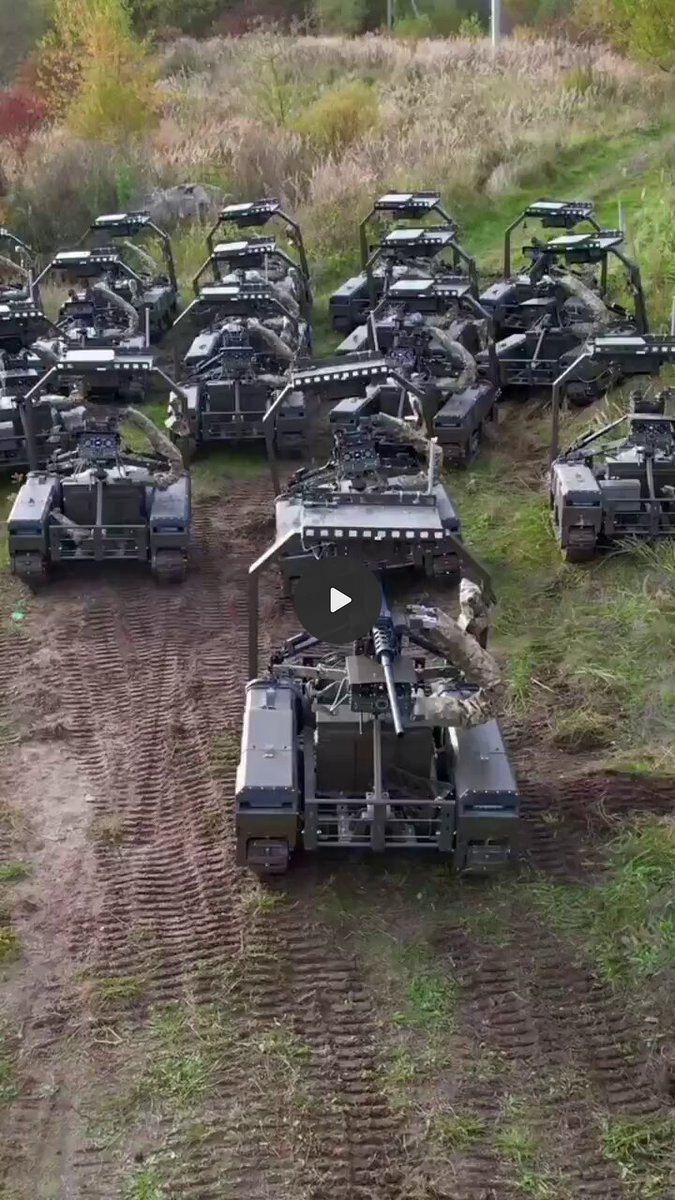
Ground robots At Sandhills 2.0 on Fort Bragg’s Range 63, the 20th Engineer Brigade ran 9 Mothers’ Bumblebee V2 and “Bee Hive,” Edda’s 12-gauge turret, Perennial Autonomy and Forterra’s autonomous Ford F-250s through a live breach, with Col. Jeff Burges declaring “gone are the days of a soldier running with a grapnel hook.” Col. Tom Monaghan’s self-diagnosis is the quotable one: the Army knows it has to stop delivering yesterday’s technology tomorrow.
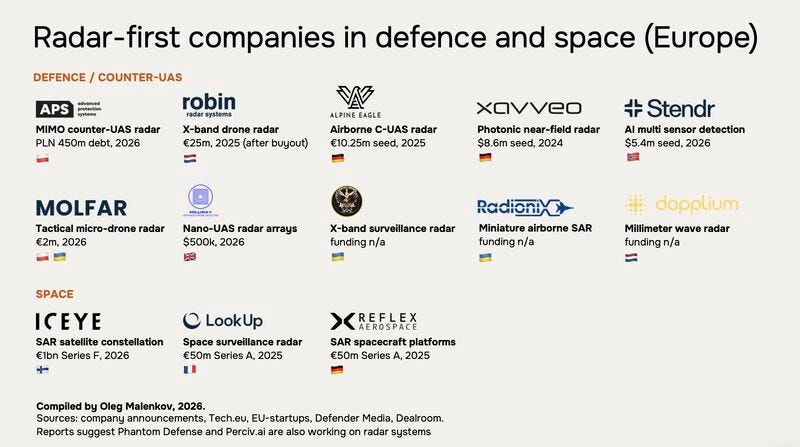
The kill zone The Times spent several days in Zaporizhzhia, a frontline city where drones have made movement itself the hazard, and the reporting is the clearest picture yet of what a 20 km transparent battlespace does to daily life.
Autonomy crosses a line A Russian drone running a few hundred dollars of Nvidia Jetson Orin hardware selected its own target and killed three civilians in Zaporizhzhia on July 6, including 19-year-old student Tetiana Bubynets, the strongest documented case yet of a fully autonomous lethal strike. The policy debate about human-in-the-loop is now trailing the hardware by about $300.
Big think Brandon Tseng’s retrospective is the most honest piece a founder has written this year: ubiquity slipped from 2035 to somewhere between 2040 and 2045, 30 investors said no in 2015, and Hivemind now flies on 30 plus platforms with autonomy integration down from three years to under two weeks with two engineers. The Ukraine lesson he keeps returning to, designing for zero dependency on connectivity as a hard requirement, is the one Canadian programs still treat as optional.
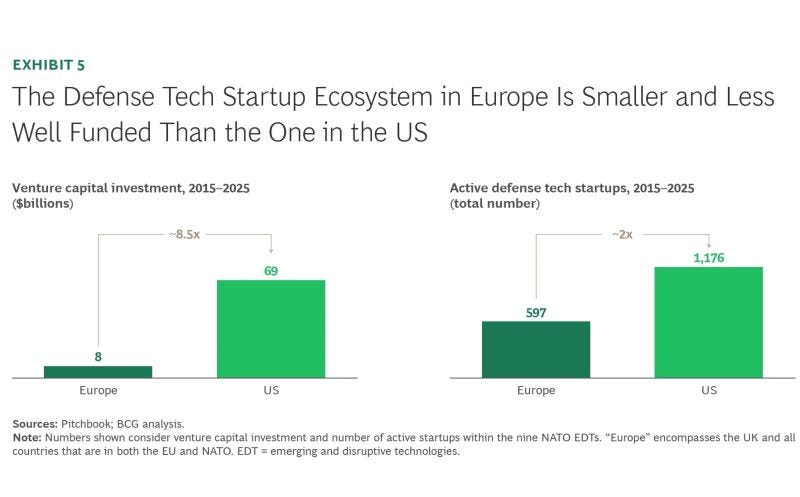
Ukraine’s next act: Mykhailo Fedorov courting US and Western capital for a defence tech fund plus weapons-development companies, weeks after his July dismissal and the Kyiv protests, with his stated priorities on cheap AI-guided missiles, robotising the line of contact and sensor nets.
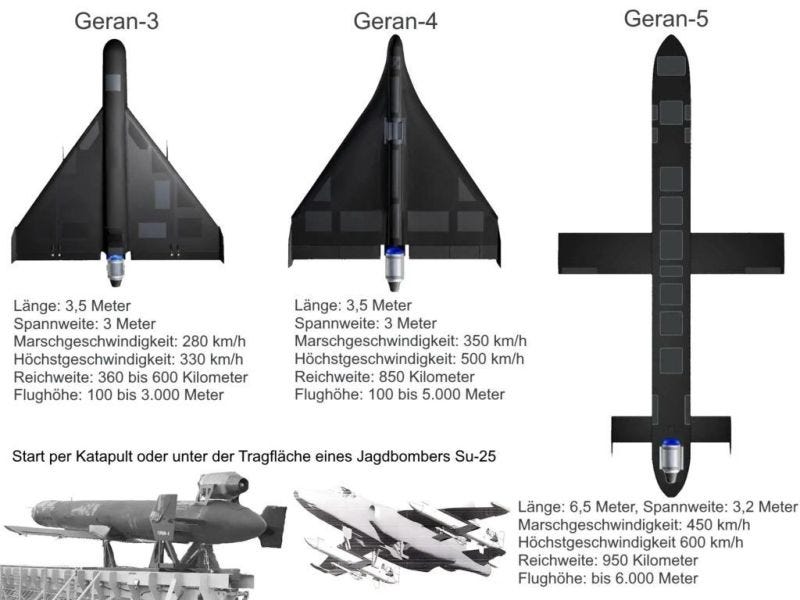
Drone doctrine wobble The Army is phasing out the 173rd Airborne’s Unmanned Assault Battalion, a unit championed by generals since removed, including Gen. Chris Donahue in July, with CNAS analyst Stacie Pettyjohn warning of a risk the Army invests in the wrong or already obsolete drone types.
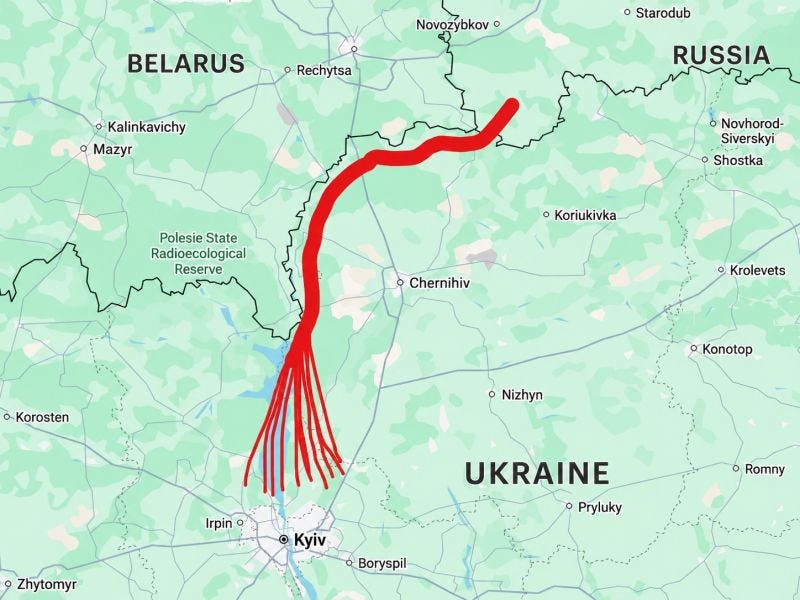
Axis watch A Beijing Institute of Technology study found China could fill only about 60 percent of wartime drone orders at triple peacetime demand, with AI-led mobilisation reaching roughly 58 percent fulfilment against 34 percent for none at all, and Prof. Zhang Jihai’s conclusion is that competition is “no longer merely about the performance of weapon systems” but industrial capacity.
Software sovereignty A federal judge ruled the Pentagon’s supply-chain-risk designation against Anthropic “illegal and baseless” in a 59-page decision, finding the punishment was driven by a desire to make a public example of the company for criticizing the government, with OpenAI signing its own Pentagon deal hours later. On the other side of the same technology, a Russian-speaking ransomware crew used SpaceX’s Cursor agent across 28 chat sessions to run hundreds of malicious operations against at least six confirmed victims, which one analyst estimates makes attackers 30 to 50 percent faster.
Europe rearms Dutch insurers are sitting on €455B of assets while the Netherlands needs €16B to €19B more per year to reach 3.5 percent of GDP by 2035, with ASR capping exposure at €100M per transaction and Achmea up to €150M from €20M in 2025, and PwC reckons roughly 400 suppliers must grow output three to four times over.
Palantir’s European problem A little-known French company is now winning the contracts Palantir used to hold, with ChapsVision’s ArgonOS taking France’s DGSI intelligence platform and a German BfV deal on roughly €200M of revenue, 1,100 staff and a €1B target for 2028. Founder Olivier Dellenbach already sold eFront for more than $1.5B, so this is not a first-time bet.

🔫 Hot Shots
🍁 A radome from Arnprior is now keeping America’s clocks safe. Competition Composites delivered an 18-foot, 25-panel, five-ply “C-Sandwich” radome to the US Naval Observatory’s Master Time Clocks Facility in three crates with a 20-year gloss polyurethane finish. Small contract, precise capability, exactly the kind of supplier the industrial strategy should be scaling.
Can quantum sensors map Earth’s gravity for navigation? Q-CTRL says yes.
Jewish Space Lasers? Israel Wants ‘Rods From God’, plans new military frontier with space-to-ground strike weapons.
Space. Low Earth orbit is turning into a traffic problem, with the Journal reporting that the accumulation of satellites and debris roughly 100 to 1,200 miles up now forces SpaceX and its rivals into constant dodging, raising the odds of a collision that damages or destroys spacecraft. SpaceX’s own filings to the FCC put the manoeuvre count above 355,000 in a single year, which works out to every Starlink satellite swerving more than 40 times annually.
🍁 Greenland and Nunavut just started building an Arctic port network without asking Washington. The Port of Nuuk’s operator signed an MOU with the proponents of the Qikiqtarjuaq Deep Sea Port and the Grays Bay Road and Port projects covering maritime resilience, emergency response, vessel support and supply chains.
The London firm quietly mapping state-sponsored technology theft. The Times profiled Strider Technologies, valued at $450M, and its use of AI to detect state-backed espionage against companies and universities, which is the category most Canadian research institutions still treat as somebody else’s compliance problem.
Someone finally shipped an exoskeleton light enough to wear. Edgerun launched a 10 lb bilateral hip exoskeleton cutting metabolic cost 30 to 45 percent, tested 100 plus times with Ukrainian operators since May from a Kyiv office, which is notable given TALOS burned $400M before its 2019 cancellation. Soldier loads went from 40 lb for 2,500 years to 90 to 140 lb today, and load carriage causes twice as many evacuations as enemy contact.
Ukrainian founders wrote the pitch guide the rest of us need. Defence Builder Fund’s Andrii Hryshchuk warns that decks get 2.5 minutes, unclear by slide three means dead, and confirmation from real military users is the hardest currency in the sector, with some deals closing only after investors watch a team for six months.
The J-20 mystery had a boring answer. Those aircraft-shaped objects spotted in China turned out to be fire trainers, though the same reporting notes the PLAAF may already field roughly 500 J-20s across 14 operational units and three training bases, possibly 1,000 airframes by 2030. The mock-ups were the least interesting number in the story.
Justice named a Chinese campaign, then quietly walked part of it back. DOJ exposed a state-sponsored operation by a group it calls QTFY targeting NASA, the Federal Reserve, the Senate, military networks, hospitals, power companies and defence contractors, using a Chinese tech company as cover, then corrected the release days later to say those were “among the targets” rather than confirmed victims.
Ukraine is winning with balloons. More than 1,000 balloons have gone up since autumn, dropping small munitions, distracting air defences, relaying radio and now launching drones to extend their reach.

The CIA director flew to Moscow and was home by dinner. Open-source trackers followed John Ratcliffe’s C-17A into Moscow on an unannounced trip, the first such visit since November 2021, which Trump called “sort of semi-routine”, with later reporting suggesting the message was a warning not to attack NATO.
The document that predicted the mobilization gap is seven years old. Quinton Lucie documented how FEMA dismantled civil defence and national mobilization planning on November 28, 1993, leaving 4.5 positions on national-security resource preparedness and roughly 25 years without a wartime mobilization strategy.
And the week’s most efficient business development hire. A Miami maritime-threat software firm turned drone defence startup brought on Eric Trump as an adviser in May on a two-year deal granting a 6 percent stake now poised to be worth about $12M, explicitly for his network of contacts.
The Icebreaker is written for the people building Canada’s defence technology base. Forward it to someone who needs it.