

Editor’s Note: We are heartbroken by the tragic news from CFB Wainwright. Our deepest condolences to the families and colleagues of those lost, and wishing a full recovery to the injured.
🎯 Three-Shot Burst
The Shahed runs on American chips. Engineers from Ukraine’s 1230th Athena Engineering and Technical Regiment pulled a Geran-4 (part of the Shahed drone family) flight controller out of wreckage in Poltava region and counted 105 identifiable components, at least 80 of them made in the United States, or 76.2%. Texas Instruments and National Semiconductor alone account for 61 parts. Not one Russian-made chip turned up.
Ukraine’s Defence Intelligence puts output at about 3,000 Geran-4/5s and 2,800 Geran-2s a month, which means 183,000 TI and National Semiconductor parts a month for this one controller and roughly €1.4 million a month in TI revenue at distributor prices.
Michael Horowitz and Lauren Kahn’s new taxonomy for CFR files Iran’s Shahed-136 as semi-autonomous without human supervision, the same bucket as radar-guided missiles that have flown since the 1960s, and puts Russia’s Geran-4 Seeker in the supervised column. Their five-type chart is the cleanest visual of the week, and their line cuts through a decade of Geneva talks: “The question isn’t, ‘Is it autonomous?’ but rather, ‘How autonomous is it?’” The recipe is spreading. Yasir Zaidan shows in War on the Rocks how Sudan became a laboratory for drone warfare thanks to Abu Dhabi: Chinese CH-95 or FH-95 drones at Nyala with 250 km of range, more than 1,100 civilians killed by drones between January and June 2026, about 80% of recorded civilian deaths, and $14 billion in electricity losses. Zaidan: “The threat here is about knowledge transfer.”
In Yemen, the knowledge now comes from a chatbot. Anthropic disclosed that a northern Yemen cell used Claude in place of human weapons engineers to write guidance, navigation and control code for a guided rocket on a phone-class flight computer, a ballistic missile with a 2,000 km range goal and an “R2000” set with a hypersonic glide variant. A UK investigative group’s mapping of Houthi procurement traces custom missile components, tools and test equipment to a Chinese supplier, which the Critical Threats Project ties to a domestic Kheybar Shekan variant. Iran’s own lines are flattened but not finished: FPRI’s satellite survey finds Parchin, Khojir and Shahroud strewn with rubble after Epic Fury, yet tunnelling at Shahroud continues and any site could be producing again within a year if Tehran sources new planetary mixers.
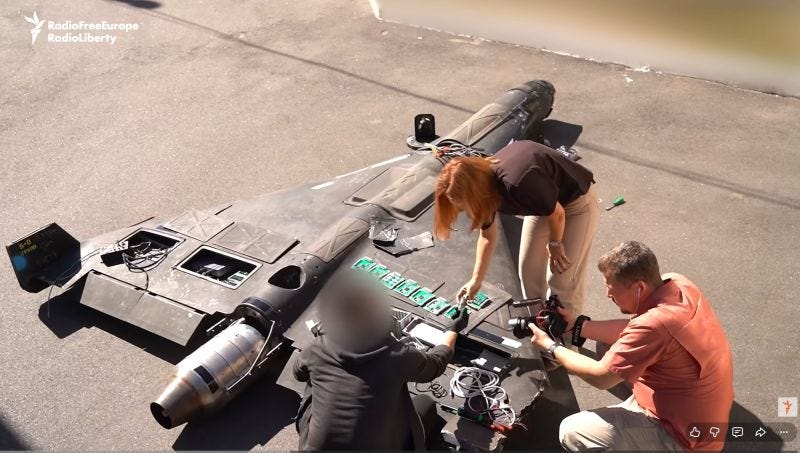
An Iranian navigation system, Western electronics, and a Russian-made Shahed. Here’s what I found inside.

A $5 million interceptor against a drone that costs tens of thousands. At DND’s fourth Counter-Uncrewed Aircraft Sandbox at Suffield, two dozen companies competed for a $1 million prize while Ukrainian Maj. Sergiy Kuzyara laid out the problem: Shaheds fly more than 2,000 km, and the new jet versions cruise with older models at about 180 km/h before more than doubling their speed. “But they switched to jet-powered and so we need to use something new: jet-powered interceptors or missiles.”
Calgary’s North Vector Dynamics answered with a metre-long, laser-guided missile built for jet Shaheds that brushed its target in a CBC-witnessed test, St. John’s StrobelTEK brought an optically guided anti-swarm missile, Colt Canada showed a proximity-fused 12-gauge round, and 2024 winner AIM Defence used its $1 million to open a 10-person Canadian division.
Reality check: A Patriot PAC-3 costs $5 million Cdn, and that is what the US and Gulf states fired at cheap Iranian drones at the start of the Iran war. Washington’s cheaper answer moved at wartime speed. The Army made Merops a program of record in 142 days, bought 13,000 interceptors within about eight days of the Iran war starting at roughly $15,000 each, with $3,000 to $5,000 possible at volume, and landed them with two NATO partners in 21 or 22 days against a 14-day ask.
The gap is widening. NATO's transformation commander, French Adm. Pierre Vandier, told CBC in Ottawa that interception rates against some Russian drones have fallen from about 90% earlier this year to roughly 50% as faster jet-powered models arrive, and that the West must now "produce what we can produce in mass and rapidly."
One rung up, Anduril’s Steelfin is a two-stage interceptor family built to come off one line by the several thousand a year, compatible with M903A2, Mk 41 and Typhon launchers, with flight tests next year. Axios’s AUSA roundup adds Chaos Industries’ Vespid interceptors with initial production of 12,000 and Raytheon’s Coyote Block 2C+RM.
The cheapest layer is a shotgun: The Economist watched about 100 British soldiers in Wiltshire turn clay-pigeon shooting into drone-defence training, 100 targets each. The quietest layer is the spectrum: The WSJ reports Ukraine’s Night Watch unit spoofed two Russian ballistic missiles into the Dnipro with its Lima system, while Russian drones answered with Chinese anti-jam antenna arrays that went from four elements to 32. US Col. Josh Koslov: “If you are not winning in the spectrum, you are going to lose the war.”
The threat is already over allied soil. CBC counts more than 1,000 suspicious drone incidents in Germany since January 2025, 261 airport disruptions there in eight months, up 80%, and more than 300 in Norway. KNDS’s Marcel Grisnigt wants Europe to let arms makers take down drones over their own plants, weeks after Estonia blamed Russian intelligence for an arson attack on Milrem Robotics: “if defence capacity is interrupted by hybrid warfare, then we won’t be ready in 2030.”
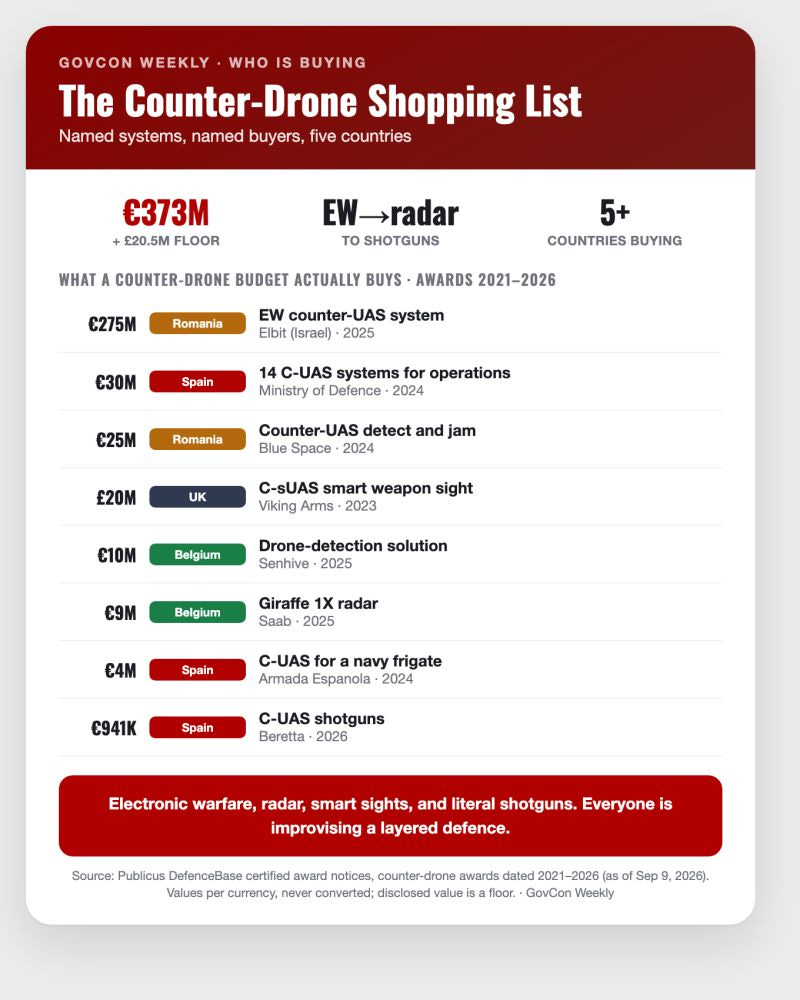
Europe is paying, and America is collecting. Publicus counts European counter-drone awards rising from 2 in 2021 to 16 in 2025, with US firms taking about €1.1 billion in disclosed awards. Canada has a homegrown entry. Sentinel AMS’s StarForge consortium, backed by a $10 million Lockheed Martin ITB tied to Canada’s 26 HIMARS and the University of Alberta, packs radar and a drone factory into a 20-foot container. Its first drones will be unarmed interceptors that kill by collision, with 65-plus Skunk Works engineers in Calgary behind the software, US Marines already training on it and Baltic trials next spring. CTO Ed Zimmermann: “designs and tactics are changing monthly, even weekly.” Canada’s own forces are still not listed as a customer.
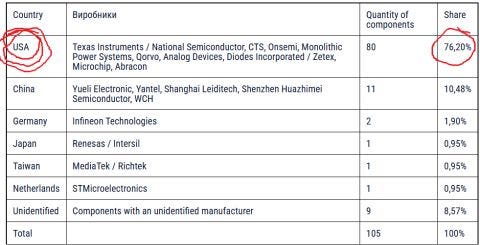
Russia calls its Geran-4 attack drone a product of domestic manufacturing. Its electronics tell a very different story
Blackstone is building an interceptor platform
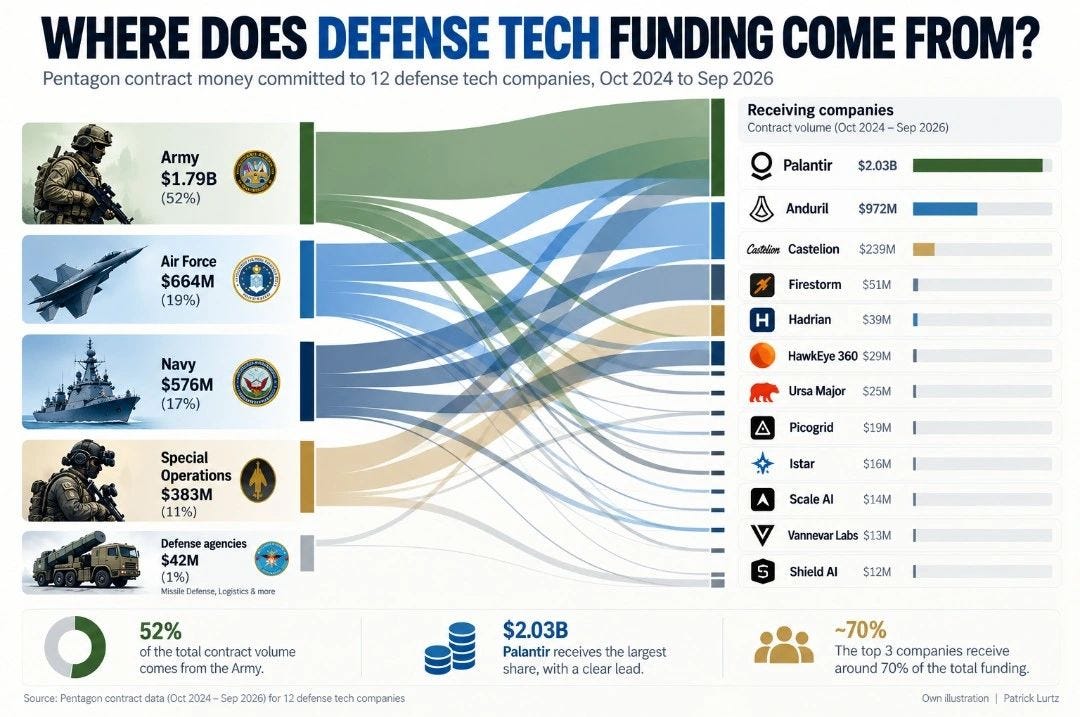
Mass is a factory problem. Hadrian signed a seven-year deal to run a “factory within a factory” inside Lockheed Martin’s missile plant in Grand Prairie, Texas: 24 machines making components for PAC-3 MSE, THAAD, PrSM and GMLRS, live by January, with 24 more in Arizona running lights-out for overflow. It lands as Lockheed works through more than $60 billion in Pentagon deals to triple PAC-3 output from 600 to 2,000 a year. Hadrian has raised $2.34 billion, the last round at a $7.87 billion valuation.
“This is the first time a defense prime has really partnered with a new, innovative manufacturing technology company like Hadrian in a service agreement.” - CEO Chris Power
Lockheed CEO Jim Taiclet and acquisition chief Michael Duffey sat down with CNBC’s Morgan Brennan to walk through stockpiles and the Pentagon’s missile contract spree, the same week L3Harris won $250 million from Lockheed for GMLRS rocket motors in Camden, Arkansas. Then the US did the obvious thing and copied the Shahed. CNAS’s Philip Sheers and Stacie Pettyjohn price the LUCAS one-way attack drone at about $35,000 against $2 million for a JASSM-ER, and model a selective strike on China’s Huian Air Base at 235 LUCAS-ERs and 8 JASSM-ERs for $39.5 million. Their summary: “The world’s foremost defense innovator and top weapons provider has now copied an adversary’s relatively simple kamikaze drone built from commercial components.”
The Pentagon wants more than 10,000 low-cost munitions in three years. Ukraine shows what Shahed-style mass does on offence. The Washington Post mapped 54 strikes between April and August that took half of Russia’s refining capacity offline by aiming at distillation units that sanctions make hard to repair. The target list is widening. After Russian drones knocked out Ukrainian data centres serving up to 100,000 Kyiv households, Ukraine hit three Yandex data centres in four days, including the site housing two of the supercomputers that train YandexGPT.
RealClearMarkets tallies a new class of defence investor: JPMorgan’s $1.5 trillion Security and Resiliency Initiative, Lockheed in $4.1 billion of venture rounds this year, the US Navy’s $900 million into Hadrian and BDC’s $500 million Defence Fund.
CIBC Innovation Banking’s Paul McKinlay and Corporate Finance’s Evan Bennitt take the question home in a new video on what Canada’s Defence Industrial Strategy holds for investors, the right primer for anyone underwriting a Canadian line. The missing Canadian piece finally has a meeting. CGAI’s Prairie Shield series will hold a December 10 workshop at KPMG Ottawa on building Canada’s sovereign missile capability, under Chatham House rules. Canada has promised millions of drones. It has not promised an interceptor line.
Bottom Line: The Shahed is not a drone. It is a supply chain, a price point and a production rate. It runs on 80 American chips, its offensive copies run Ukraine’s refinery campaign, and the US now builds its own at $35,000. Killing one costs $15,000 with Merops or $5 million with a Patriot, and the winner is whoever owns the factory behind the cheaper shot.
ADVERTISEMENT

Barrack Hill: Navigating Canada’s defence and procurement landscape with precision.
🤝 Deal Corner
💭 When does a neoprime become a prime? Investor Sam Burrell flagged that Anduril cannot start FQ-44 Fury production under its CCA contract until Congress passes a 2027 budget, four months after it beat Boeing, Lockheed and Northrop to become the first new entrant to win a fighter program since the 1970s:
“The situation raises a few questions. When does a neoprime become, just, a prime? Does the product-first model actually transfer to exquisite platforms, or only to attritable ones? And is there a version of this where the neoprime changes the customer rather than the customer changing the neoprime?”
This week offers partial answers: Steelfin is product-first at attritable scale, Hadrian is a neoprime working inside a prime’s factory, and Merops shows the customer can change when it wants to, 142 days to a program of record.
Jackson Moses: Sellers need buyer dollars to operate


🍁 Dominion Dynamics will build Ukraine’s TerMIT robots in Canada. The Ottawa firm signed an MOU at AUSA with Tencore to produce the tracked TerMIT ground drone in Canada as early as 2027, running Dominion’s AuraNet command-and-control software, for resupply and mine-laying on Ukraine’s front. BetaKit adds that Tencore claims more than 5,000 UGVs delivered since 2024, Dominion has raised $169 million CAD including a $139 million Series A, and an Arctic-hardened variant is planned for Canada and NATO export.

🍁 CSG becomes MDA Space’s largest shareholder with a $434M stake. The Czech arms group bought 9.5% of MDA Space through a dedicated subsidiary as its entry into space.


🍁 Rozvelt raises $3.1M to take a hunting mask to war. The Montreal startup's Vektr headgear hides a hunter's exhaled scent. After SHOT Show, defence firms asked for a version that also filters inhaled lead and other particles, so Rozvelt closed a $3.1 million seed round led by Evovest's Benoit Robert to build military, police and first-responder lines and to start Canadian production this fall.
🍁 RBC sizes a US$10B launch market Canada could chase. RBC's Mission Critical report finds at least US$10 billion in launch demand open to Canadian rockets between 2027 and 2035, out of a global market worth up to US$265 billion. It argues defence should anchor the spending, because military satellites cost five times as much to build and launch and will make up nearly half the value of the decade's satellites.
🍁 Tenstorrent raises US$1.5B at a US$6.2B valuation. The Toronto-founded AI chipmaker closed a US$1.5 billion round led by Trace Capital and Innovation X, with ARK Invest, Fidelity, Morgan Stanley and T. Rowe Price in the syndicate. That comes months after Intel and Qualcomm reportedly each offered more than US$5 billion to buy it. The catch is that Tenstorrent moved its headquarters to Austin in 2023, Toronto now holds 200 of its 1,000 employees, and co-founder Ljubisa Bajic's Toronto spinout Taalas went to AMD in August. Export Development Canada backed it early, and Canada still lost the head office.
🍁 NRC IRAP has put $135M into defence and dual-use SMEs since January. Defence Industry Assist, launched with $241 million, has backed 860 SMEs and more than 540 projects and supported 2,300 jobs across all 10 sovereign capability areas. Canadian Defence Review notes 79% of recipients have fewer than 50 employees and half are under ten years old. Small cheques, wide net, and the first program this year to show real volume.
🍁 49North hands TerraSense a slice of the RPAS program. A TerraSense-led consortium with UBC’s STAR initiative and KF Aerospace will fly EO/IR collection over the Strait of Georgia to train automated target classification for the RCAF’s 11 CQ-9B Guardians, due by 2028, under 49North’s $78.2 million GA-ASI contract. Build-Partner-Buy, with the Canadian part doing the data work.
🍁 CSA’s tech fund hits its smallest round since 2014. STDP AO 10 split $11 million across 15 companies and 16 projects, with $1 million cheques to Kepler, MDA, MPB, NordSpace and Obruta and $860,000 left unawarded.
ADVERTISEMENT

Learn more.

🍁 Canadian space and defence names head for Bay Street. NorthStar Earth & Space won conditional TSX approval to list as NSTR after a SPAC merger where 96% of Viking’s public holders redeemed, leaving about C$32.5 million, most of it PIPE money, against roughly C$17 million owed to Spire after a July arbitration loss. Maritime Launch also won conditional approval to move MAXQ to the TSX with Isar’s Spectrum complex under construction and a 2028 first launch targeted. Harjit Sajjan and Hunter Scharfe’s Juno Industries is taking over capital pool company Trail Blazer to list on the TSXV as JUNO, last traded at C$0.075. NordSpace, meanwhile, broke ground on Phase 2 of its Newfoundland spaceport using $10 million split between the company, ACOA and a provincial loan that is three-quarters forgivable at 100 jobs. Public money is going to be the test for these balance sheets.

🍁 Flavio Volpe wants $1B to turn auto plants into vehicle lines. APMA’s president is pitching Project Arrow Defence Industries to build military vehicles with Hanwha tech and partners like Linamar and Martinrea, one of 167 ventures in the Canada Investment Summit deal book.
Dominion Dynamics CEO makes the historical case that Canada retooled its factories for war in 1938 and Trump’s tariffs give it reason to do it again.

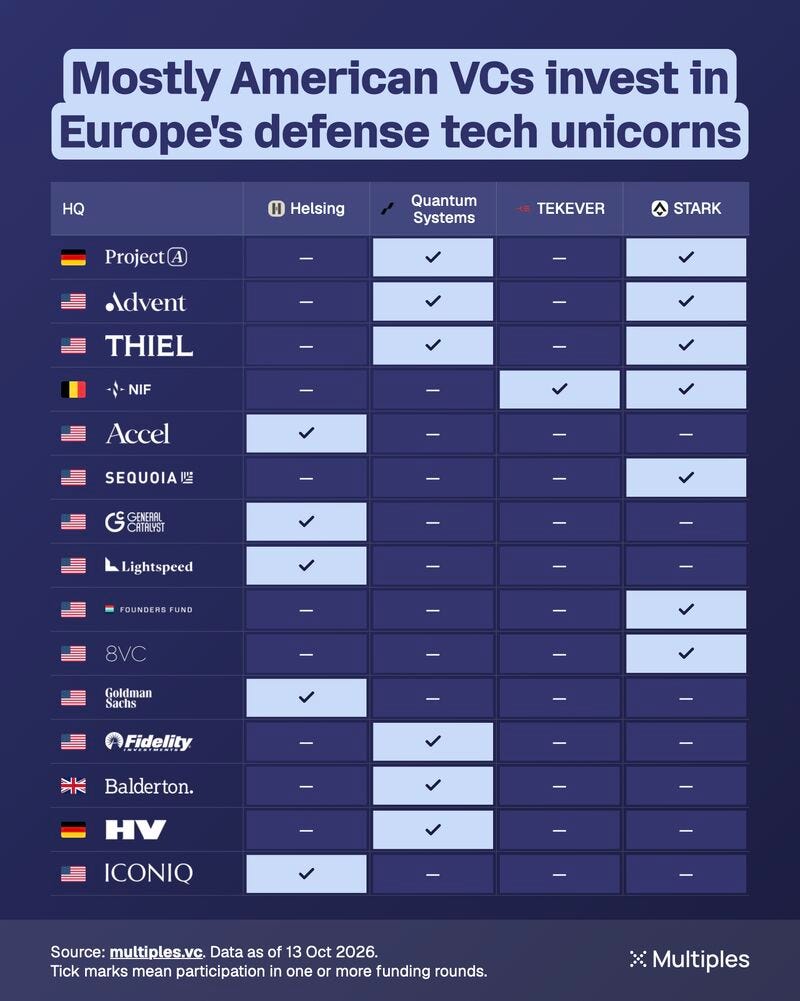
Sensors and space radar raise $39M. Austin Sensing Company emerged from stealth with $15 million, led by Bow Capital’s $11 million seed, for an RF detector covering 28 square miles per unit that already sits with more than 40 US police and fire departments. Seattle’s Kapta Space took a $24 million Series A led by Washington Harbour Partners for metamaterial radar payloads that track moving targets from orbit. Gallatin AI’s $50 million Series A for logistics software rounds out the week, and PitchBook puts global defence-tech VC at $67.4 billion so far this year.
Britain’s sovereign AI fund backs Augur. The £500 million fund, which writes £5 million to £10 million cheques, invested an undisclosed amount in the ex-Palantir founders’ security startup and gave it time on the Isambard-AI supercomputer.
NATO’s fund goes east, and so does a Ukraine-first seed fund. The NATO Innovation Fund opened a Warsaw branch under Jan Duthel to chase procurement and deal flow in a region where it has yet to back a single startup directly. WildField Ventures is raising a $10M to $15M dual-use fund with $250,000 first cheques, three-quarters for Ukraine and an explicit ban on weapons, munitions and finished drones. Components, sensing and compute are where the next round of Ukrainian value sits.
Washington wires small-business capital into the arsenal. The Pentagon and SBA signed a deal to route Economic Defense Unit referrals into SBA-backed funds under the new Smaller War Plants Commission, aimed at munitions and critical minerals. SBA’s Kelly Loeffler says small manufacturers make up 70% of the defence industrial base. Congress already raised SBIC leverage limits this year and wants more private-market managers in the program.

Related: Resilience Media asks whether there is a defence tech bubble and gets a “hard no” from JPMorgan’s Daniel Rudnicki Schlumberger, who puts European military-tech spending at 0.02% of GDP, while Sifted reports VCs catching founders misrepresenting or blurring their defence revenue, Kyle Briggs shows the $1 trillion US budget has only a $91 billion front door for new entrants, and cyber is on pace for a record year of M&A with 219 deals in the first half.


ADVERTISEMENT

Learn more here.
⚔️ Combat Readiness
The golden hour is gone. In-Q-Tel’s medical team writes that in Ukraine, moving a wounded soldier to advanced care can take days, sometimes more than a week, against about an hour in Iraq and Afghanistan, so field kit has to run for days on end, survive mud and drops, and hide its heat, light and radio signature. Their fix is to put early-stage med-tech in front of operators before the design freezes, because lab validation “tells you almost nothing about whether it’ll survive a rucksack, a firefight, or 48 straight hours of use.” The New York Times shows why. Two soldiers of the 128th Heavy Mechanized Brigade spent more than 200 days in a 200-square-foot ruin inside the kill zone, walked six miles over four days to get out, and each lost 40 pounds while Russian drones flew 678 resupply sorties in a single day nearby. Strike range grew from a few miles in 2024 to 20 miles for most drones and 40 for fixed-wing by 2026. Mykhailo: “The modern concept of war did not foresee this.”


Salt Typhoon is still inside. The joint advisory from the NSA, Canada’s Cyber Centre, CSIS and Five Eyes partners remains the playbook for China’s campaign against telecom backbone, provider-edge and customer-edge routers in Canada and worldwide since at least 2021, naming three Chinese contractors that work for the PLA and the MSS and five exploited Cisco, Ivanti and Palo Alto CVEs. Its warning: “Partial response actions may alert the actors.”
The front door is your living room: The WSJ estimates 20 million residential-proxy backdoors in cheap US home devices, and Citizen Lab and Confiant found Israeli ad firm Discover-Tech using online ads to track users and deliver Candiru spyware across 120,000 websites, with hits on networks at NATO and the Pentagon. The FBI took down more than 40 North Korean laptop farms in Texas that took 70 companies for more than $3 million, and arrested Richmond Hill’s Edward Dubrovsky, a former CYPFER executive, in the ShinyHunters extortion case, the same group that claims a petabyte from Telus Digital. Former CSIS director David Vigneault adds the next attack surface: in a Chinese EV, “everything you do around your car, will be acquired by China” as Ottawa courts Chinese joint ventures for 50,000 cars a year. Canada’s cyber exposure runs through routers, ads, payroll and parked cars.
🍁 Kit for Canada. The Army’s Minerva program is racing to buy cheap drones through prototype challenges rather than requirements lists, with Arctic surveillance drones for the Rangers capped at $500,000 per award, a wish-list due in three to four months and a separate counter-drone tender for bases. Lt.-Gen. Darcy Molstad: “We have to treat it almost like an expendable commodity.” The big-ticket file is moving the other way. Ottawa paused 16 UH-60M Black Hawks for special forces after State had already approved them, leaving 427 Squadron on 30-year-old Griffons, while Google cloud, a Raytheon trainer and HIMARS all slipped. Justin Massie: “What is changing is not so much the strategy as the political discomfort.” Retired Lt.-Gen. Alain Pelletier warns a split F-35 and Gripen fleet would stretch an RCAF that is already short of pilots and technicians: “You cannot duplicate people. You cannot clone people.”

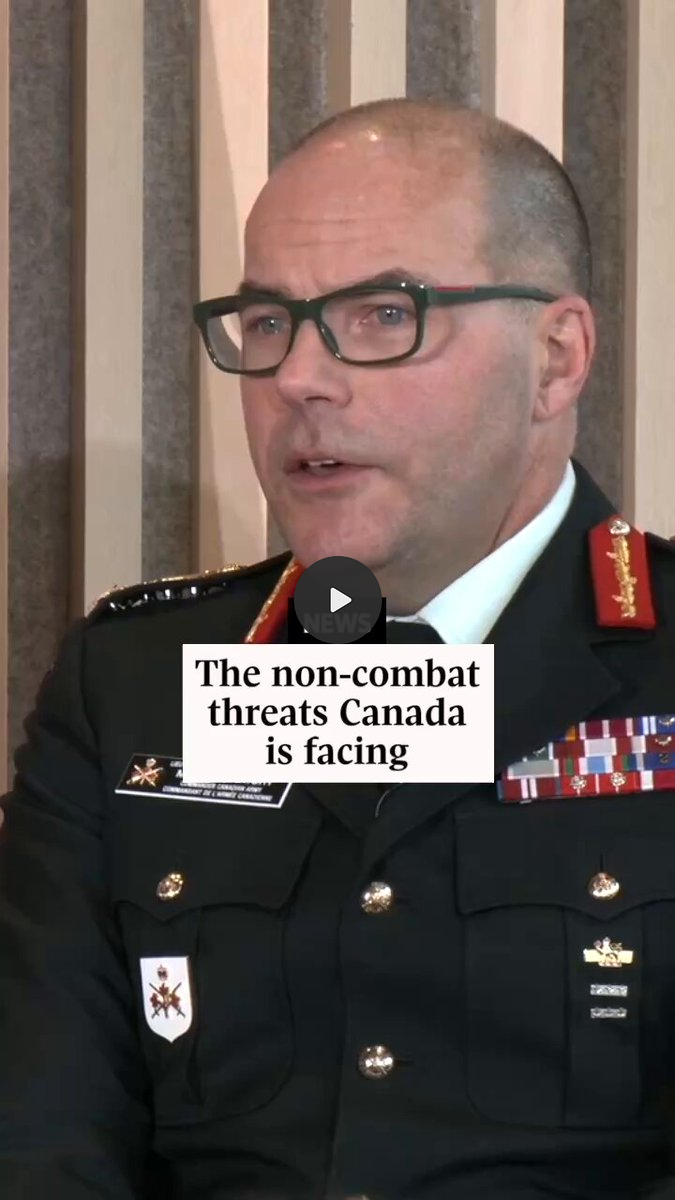
🍁 Money is not readiness. Even as defence climbs from $75 billion toward $95.6 billion by 2030, Treasury Board is weighing 10% cuts to DND operating spending, the 2023 cuts of $810 million then $908 million a year still apply, readiness sits at 61.3%, and only one of four Victoria-class subs works. Retired Lt.-Gen. Andrew Leslie: “do not cut operations, training and maintenance because that is the lifeblood of the military.” Benchmark Canada puts Canada 28th of 31 allies on equipment share and 29th of 30 on troops per capita, and retired Vice-Adm. Mark Norman calls it a defence-spending quagmire where “time literally is money”. Scotiabank’s Rebekah Young adds that hitting 5% means about $30 billion a year in new security infrastructure, with a blunt verdict: “Canada has simply never built at this pace.” The Globe’s Ottawa forum framed the same 5% as up to $150 billion in annual investment. The money is arriving faster than the military can absorb it.
🍁 Procurement plumbing. Blakes reads Bill C-40 as sweeping changes to Canada’s defence procurement regime: a Crown corporation for the Defence Investment Agency, an associate minister for procurement, non-competitive authority, lending without Finance’s sign-off and DNSPPA records carved out of access to information. Procurement Ombud Alexander Jeglic flags the catch, since C-40 does not extend his mandate to the new Crown, and “there’s a danger in removing transparency” when the money moves. His annual report, themed Time for Results, logged a record 851 cases, up 27%, with complexity cited 150 times and e-procurement complaints up 127%, and the government-wide chief procurement officer he calls the most critical fix still does not exist. Jeglic: "the success of procurement reform will be measured not by new initiatives launched, but by outcomes delivered."
🍁 Software sovereignty. Dominion’s Eliot Pence and Matt Clancey argue in the Financial Post that there is no sovereignty without software, noting the RCN’s first operational autonomous surface vessel tender weights Canadian content at 58% while the River-class destroyers will run American Aegis code Canada cannot modify. Key line: “Canada does not need to build every ship. But we must control the systems that tell our ships what to do.”
The Theodore Roosevelt strike group deployed with a large drone ship for the first time, DIU opened the second $40 million sprint of its SWAP-USV prize for drone boats that carry drones, and NAWCAD landed a drone on a pitching deck with GPS jammed using commercial cameras and software. NAWCAD’s Peter Arslanian: “GPS is the first operational link an adversary attempts to sever.”
Single point of failure. SpaceX capped military-grade Starlink above 160 km/h in Ukraine without warning, and adviser Serhiy Beskrestnov says several missions were disrupted. The FT reports Kyiv was blindsided by the Starlink restrictions and by intelligence gaps as Russia fired 39 ballistic missiles and more than 120 drones at energy sites covered by Trump’s “energy ceasefire.”
Starlink vs Starshield
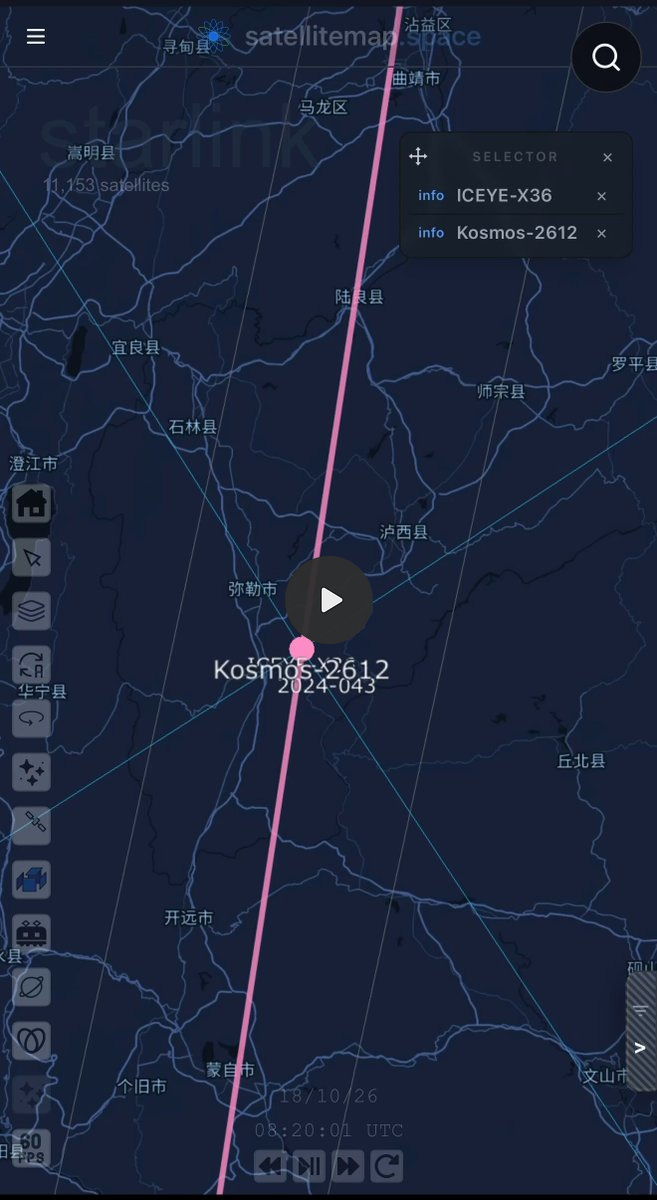
Space. CSIS tracks Russia’s Cosmos 2612 manoeuvring into the orbital plane of an ICEYE radar satellite that supports Ukraine, after five sister satellites burned fuel to chase it in May and one came within 2.5 km. Axios says America is not ready for space war, with China past 1,400 satellites and the supply base “running hot at peak demand, yet structurally fragile.”
Washington wants 1,000 launches and reentries a year by 2030, and the US, Russia and China are racing to put nuclear reactors on the Moon, NASA’s by December 2030. Zero Point Cryogenics’ Chris Cassin points out the US is paying Interlune $6.9 million to go to the Moon for a resource Canada has at scale: helium-3 from CANDU reactors at Darlington.
Counter-drone. Daniel Weiss's Small Wars Journal essay argues counter-drone weapons have arrived, and so has the bill: firearms are the most widely used physical defence in Ukraine with the best cost per kill, Army laser production systems run an estimated $21 million to $25 million each, and the one on the southern border targeted a Border Patrol drone two weeks after firing on balloons forced a 10-day FAA closure of El Paso airspace. His verdict on lasers and microwaves: "Pennies to shoot, millions to field."
ADVERTISEMENT

Discover funding programs, industry intel, and resources to grow your business. Join Canada’s largest advanced manufacturing community for free.
🍁 Europe is the hedge. Matija Renčelj of the European Space Policy Institute argues space is Canada’s gateway to European collaboration: a record €407.7 million ESA pledge, von der Leyen floating EU associate membership, Kongsberg signing with MDA and Telesat, and France’s Aldoria selling space-surveillance data to the CAF’s Space Division. The Economist’s leader argues Carney shows middle powers how to handle a dangerous world, with Davos’s warning that middle powers who stand alone will “be on the menu.” Diversification is now policy.
The Atlantic asks how Canada's military buildup is actually going and finds Ottawa promising 70% of defence contracts to Canadian firms within a decade, after years of sending more than 70% of capital spending to American kit, with core spending projected to climb from about $64 billion in 2025 to $160 billion by 2035 and no financing plan.

🍁 Home front. John Ivison reports intelligence warnings that Moscow is preparing to target executives of firms supplying drones to Ukraine, and that Canada’s Sentinel R&D was threatened with having its address made public after its Airlogix deal, “a form of intimidation that sits squarely in the information-operations tool kit.”
Shadow war. The WSJ tells how Lt. Lev Stupnikov, a 26-year-old Russian signals officer, fed Ukraine coordinates that killed more than 300 Russian soldiers, starting with a strike near Vuhledar that killed 68, including a brigade commander, before he crossed the line using the password “Peanut shop.”
Minerals and money. Lawfare’s Kirsten Asdal, Tom Koch and Tao Tan argue America did not lose its rare earth industry, it sold it, from GM’s 1995 sale of Magnequench to a Chinese-backed group to China’s current 90% grip on refining, and propose a contingent convertible bond that converts to equity if Beijing chokes supply. “Markets price for cost. China prices for control.”
The American Prospect profiles Deputy Secretary Stephen Feinberg, the Pentagon’s buyout king, whose investment units are staffed by former Cerberus executives, whose old firm backs Canada’s Torngat Metals, and whose ethics framework the Pentagon will not describe.
ADVERTISEMENT

Access a network of defence specialists that provide sector expertise, structured financing and strategic connections to help navigate the industry and grow. Click to connect.
🔫 Hot Shots
🍁 ONE9 teaches dual-use from problem to market. The ONE9 team is running a one-hour hybrid workshop series at Area X.O in Ottawa on investor expectations, validating capability gaps and dual-use as a deliberate go-to-market strategy, with one-on-one time with the team afterward.
🍁 DND’s MINDS grants close October 26. Targeted Engagement Grants pay up to $100,000 for defence and security research, events and publications, and the Young MINDS stream pays up to $10,000 for students. Think tanks and industry can both apply.
🍁 Six Canadian dual-use firms can go to Seoul. The Trade Commissioner Service’s Korea defence CTA special edition takes up to six companies through virtual mentoring and three days of B2B and B2G meetings in Seoul in February, with applications due November 5. Uncrewed systems and sensors get priority.
The US Army wants allied spectrum kit. G-TEAD and USAREUR-AF’s ACE 27-02 challenge is open to firms incorporated in allied countries, with $1.5 million in prizes, $6 million in OTAs and white papers due October 30. Winners in the first three areas can go straight to a Phase II SBIR through the DoD SBIR/STTR submissions portal.
🍁 The biggest Coast Guard ship ever got its keel. Seaspan laid the first hull module of CCGS Imnaryuaq, a 158-metre Polar Class 2 icebreaker due in 2032, with an Inuit Nunangat coin set into the hull for luck. Davie’s Arpatuuq is being built in Helsinki.
🍁 Zeal Motor’s Fat Trucks found a defence market. The Bromont firm’s Arctic trial vehicles came home with no major breakdowns and no spare parts, which turned an ISC prototype into CAF and US Air Force contracts and a 500-vehicle-a-year plant in Cowansville. Defence is 20% of revenue today and could reach 50%.
Norway has a playbook for newcomers. Defender Media published a guide to entering the Norwegian defence market, timely after Kongsberg’s MoU with MDA Space and the new Canada-Norway Arctic space agreement.


The plumber who pulled the yoke. When a FlyDubai first officer attacked his captain with an axe and put Flight 1073 into a dive of 14,000 feet in 29 seconds, Israeli passenger Yaniv Hayun grabbed the controls, and he credits the Toronto-made series Mayday for teaching him what to do, now in its 27th season across 150 countries. Two off-duty pilots landed the plane in Saudi Arabia. His instruction, learned from Canadian television: “you have to pull the yokes when the plane’s nose is down.”
The Icebreaker is written for the people building Canada’s defence technology base. Forward it to someone who needs it.