

Editor’s Note: The Icebreaker and Source Canada are offering a limited number of free passes to Source Canada 2026 (October 22 in Toronto) to serving members (Regular and Reserve) of the Canadian Armed Forces. If you want to meet the defence innovators from across the country building the tools you’ll use, apply for a pass while they last.
🎯 Three-Shot Burst
The arsenal of democracy is waiting on a screw. The New York Times went to Saginaw, Michigan, and found the part that decides how fast America can rearm: the precision ball screw, a spiral cut into metal that sits inside Patriot missiles, aircraft and humanoid robots, where demand has jumped as much as 50 percent since 2020 and a shortage now adds “months or even years” to building a missile. Only a handful of American firms can make them to military spec, and most are already at capacity.
The Wall Street Journal shows what sits downstream of that choke point: RTX’s Tucson plant runs around the clock and Lockheed Martin is hiring hundreds in Arkansas to triple Patriot output, but the US fired more than 1,000 Tomahawks in two months against Iran and burned roughly half its high-end Patriots, so most of the new missiles will arrive too late for any fight in the next couple of years, even with a $23 billion Tomahawk order on the books. Munitions averaged just 7.5% of Pentagon procurement and research spending from 1999 to 2025, against 23% for aircraft. The chokepoints go deeper than screws. China controls 68.6% of global germanium, the price is 9 to 10 times 2023 levels, and every thermal sight and missile seeker needs it, which is why the Pentagon’s CLEAR program just funded LightPath’s germanium-free BlackDiamond glass.
Batteries are next: the Pentagon handed Amprius up to $75 million to convert a US electric vehicle line into a drone cell plant, targeting 12 million NDAA-compliant cells a year by early 2028. Arena Physica’s teardown explains why this matters: DJI holds about 70% of the global drone market and grew hardware margins from 72% to 79% on a roughly $139 bill of materials, beating Apple’s 53% on the iPhone 15 Pro Max, because it designs its own silicon inside a Shenzhen supply belt that makes over 80% of the world’s lithium batteries. Missile primes are now reaching beyond the traditional rocket-motor base to spacecraft and hypersonic-jet companies for propulsion. The strategic stakes are spelled out in Foreign Affairs. Michael Horowitz argues the Iran war proved that the age of precise mass is here: 1,000 targets hit in 24 hours and 12,000 more in 37 days, and the regime is still standing, because “militaries cannot endlessly block salvos of $35,000 Shahed-136 attack drones with $4 million Patriot missiles.” Nadia Schadlow names the result, warning that the US is caught in an attrition trap built on capacity, adaptation and political gaps, where paper power fails to become sustained combat power. The Canadian version comes from CGAI. Jahara Matisek notes that Canada sends 69 cents of every defence procurement dollar to its Five Eyes allies, that 54% of the navy’s fleet was unserviceable in a 2024 DND report, and that Canada ranks top five in 14 of 31 critical minerals yet exports its nickel and cobalt to be refined elsewhere. His line should be taped to every DIA desk: “production is power; dependence is a strategic liability.”

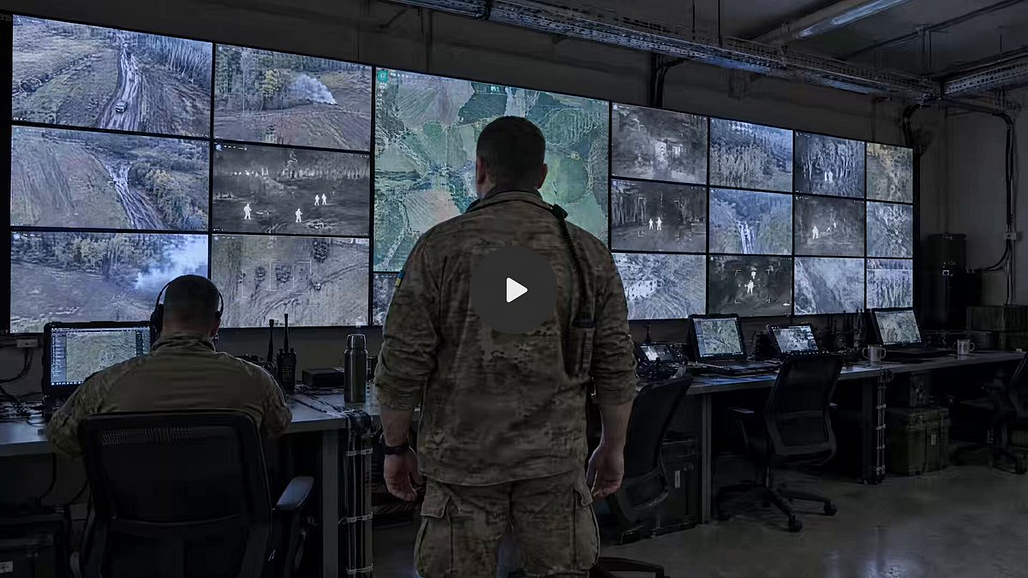
Canada is spending $180 billion on kit. Can we take delivery? The sharpest Canadian defence essay of the season comes from Stewart Leckie, L-SPARK’s director of defence and dual-use technologies, reprinted in The Walrus. His question is whether Canada is “structurally capable of taking delivery” of dual-use technology, now that spin-in from commercial markets has replaced spin-off from government labs. His answer on procurement is brutal: “It is not broken. It is working exactly as designed.” In 2018 Ottawa counted 92 business innovation program streams across 20 departments and promised to cut them by up to two-thirds, and the Defence Industrial Strategy then added more: “Instead of more access, they built a maze with excellent intentions.”
Canada built DATAR, a networked radar and sonar battle picture that worked on Lake Ontario in 1953, a decade before anyone else, then could not afford to field it. The pattern is repeating in real time. Hamilton’s Sentinel R&D designed its drone around Ukrainian requirements, builds small autonomous aircraft for Ukraine’s Airlogix, and CEO Kath Intson told the Nrth conference she is now selling “directly to the Ukrainians” with no trouble finding buyers abroad. A different Sentinel, Châteauguay’s Sentinel Advanced Military Solutions, spent two weeks in the California desert in August printing drone chassis and flying missions from a deployable field factory, with a second-generation StarForge due around mid-October and a $10 million Lockheed Martin ITB contribution tied to HIMARS behind it. CTO Ed Zimmermann: “Every NATO country is struggling to some extent to keep legacy equipment in the field, because supply chains have atrophied and lead times are long.”
Reality check: TerraSense points out that the RCAF’s first MQ-9s land in 2028, 19 years after the JUSTAS RFP was supposed to drop, and the Army owns fewer drones than Ukraine loses in a week. Spreading the Defence Drone Initiative across 400 companies selling 100 drones each is a start, but: “If we try to build a domestic industry by churning out $5,000 hardware-focused drones a hundred at a time, we will lose.”
Space money doubled in six months. Canada’s biggest pensions had more in China than in Canadian equities. PitchBook’s space tech snapshot shows startups raised $11.3 billion across 244 deals in H1 2026, already past all of 2025’s $10.1 billion, with the median deal more than doubling to $14.5 million, late-stage rounds taking 87.4% and Europe hitting a record 21.1% share. Rocket Lab’s roughly $8 billion bid for Iridium put spectrum and customer access at the centre of the market. Demand is outrunning supply: a rocket shortage has operators weighing whether to build their own launchers or buy a rocket maker as mission costs climb. Public markets are sending a mixed signal. Bernstein says US defence stocks have slid from a premium to a discount despite record backlogs, because the problem “is not demand. It’s dysfunction.” in Congress, with the November 3 midterms as the likely clearing event.
Canada’s institutional money is the harder problem. The Canadian Shield Institute’s “Worth It” report finds pension holdings of Canadian public companies fell from 28% of assets in 2000 to under 4% by 2023, with the eight largest funds holding roughly $88 billion in China against $81 billion in Canadian equities. Ontario Teachers’ new $10 billion Canada pledge is 3.3% of its $303.2 billion, CPPIB keeps 12% at home, and OSFI confirmed the promised disclosure framework was quietly abandoned. CPPIB’s Michel Leduc told MPs: “By design, we are not a sovereign wealth fund, a development bank, a social-cause vehicle or an innovation venture.” The banks are moving faster than the pensions. CIBC’s capital markets podcast sat down with COVE CEO Melanie Nadeau on how Canadian entrepreneurs can scale breakthrough defence ideas and why this is a pivotal moment for the defence and resiliency sector.

ADVERTISEMENT

Barrack Hill: Navigating Canada’s defence and procurement landscape with precision.
🤝 Deal Corner
Canadians backing Canadians, in America:


🍁 Ottawa signs a preliminary deal for six Saab GlobalEye aircraft. The airborne early warning jets would be built in Canada with Bombardier, but the agreement is not a contract and carries no cost or timeline, and sources say the platform has met only a handful of RCAF requirements. Full NORAD integration needs US stealth communications technology Washington has never shared.
🍁 Canada and Norway open a government-to-government procurement lane. The Canadian Commercial Corporation and the Norwegian Defence Materiel Agency signed an LOI that lets Norway buy Canadian ammunition, missiles, UAVs, air defence and electronic warfare kit through CCC’s G2G model, with Ukraine deliveries the first target. CCC has run G2G contracting since 1946.
The Ontario Ministry of Economic Development, Job Creation and Trade is undertaking a capacity mapping exercise to identify companies in the province that are capable of producing munition parts.
Eva Sula, who will speak at GCXPO in Ottawa today, on the barriers SMEs face in defence
The Real Arms Race Is Over Who Gets to Test First
🍁 Scotiabank prices Canada’s first defence bond at C$750M. The 5NC4 Canadian Defence Notes priced September 21 as the first offering under a framework published September 8, and the proceeds finance general-purpose loans to defence and security entities, public or private. A labelled defence bond is a new asset class in Canada.
🍁 Ontario Shipyards bids to build a 16 to 20 ship corvette fleet. The federally owned Port Weller dry docks once employed 2,000, and CEO Shaun Padulo now runs 175 workers and a $135.6 million CCGS Terry Fox refit that slid from summer 2025 to December 2027, while pitching up to 800 direct jobs on a program first pegged at $5 billion and now expected to cost substantially more. Vard’s Derek Buxton: “The procurement system has always been afraid. It’s lacked courage, and that’s why processes take forever.”

🍁 MaRS and Vimy Forge launch a “capital matchmaking engine.” Toronto’s MaRS joins the Fredericton accelerator to pair unproven defence startups with investors who understand the risk profile, after a first cohort including Cellula Robotics and Wuxly and with a second due in January.
DND’s MAIple Stack pulls in Cohere, Anvil Intelligence, H2 Analytics, Larus and Tactiql behind a $33.5 million seed line in the departmental plan.
Quartermaster raises $140M for ocean awareness. Insight Partners preempted the Series B four months after a $43 million A, with about $100 million in equity from Insight, Overmatch Ventures and First Round and a $40 million debt facility from Stifel. SmartMast sensors now sit on more than 650 vessels in 25 countries, with 800-plus systems shipped.
🍁 Halifax-based space technology company Galaxia has raised 4.5 million to continue developing advanced sovereign satellite systems built in Atlantic Canada.

DTCP closes €455M for a dedicated defence fund. Deutsche Telekom, Porsche SE, Denmark’s EIFO, Danica and Estonia’s SmartCap anchor a “Europe-led, NATO-aligned” vehicle that targets mostly Series B and later, with Kraken’s $175 million and Six Robotics’ €12 million rounds already in the book. Other NATO members’ startups are in scope.
Flagship Pioneering wins up to $47M to build biodefence platforms. The five-year ONTARGET award from the Chemical and Biological Defense Program buys a portfolio of platform technologies instead of one product, starting with Apriori Bio and Prologue Medicines.
Toronto’s Biossil raises $153-million in OpenAI-led funding to bring resuscitated drugs to market.
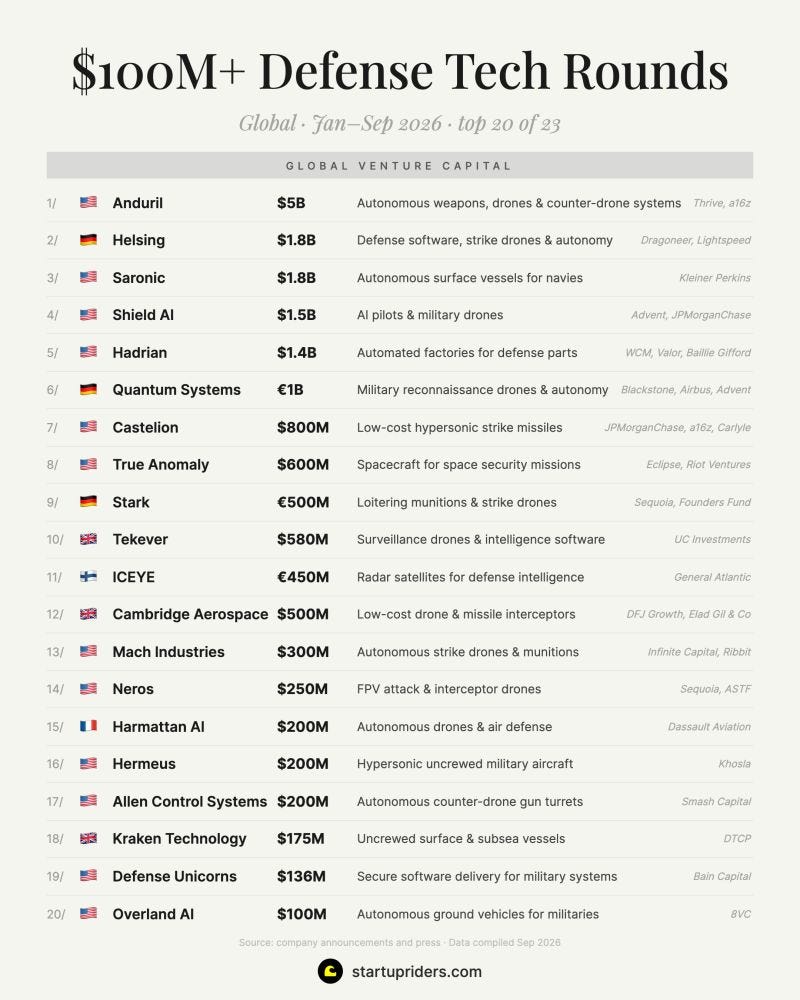
Related: Tectonic got inside Brave Capital and DIU’s private Brave Frontier retreat outside Austin, where DIU deputy director Maj. Gen. Joe Kunkel told founders that only a select few in the department actually control the money and Shield AI recounted a V-BAT that lost GPS two feet off the ground in Ukraine before finding an S-400 two days later, a useful reminder that demand signals, not pitch decks, decide who survives.
ADVERTISEMENT

Canada is revitalizing its economy, with strategic industrial investments that build domestic production capacity. The semiconductor sector is making formidable contributions. Join us in Ottawa.
ADVERTISEMENT

Learn more here.
⚔️ Combat Readiness
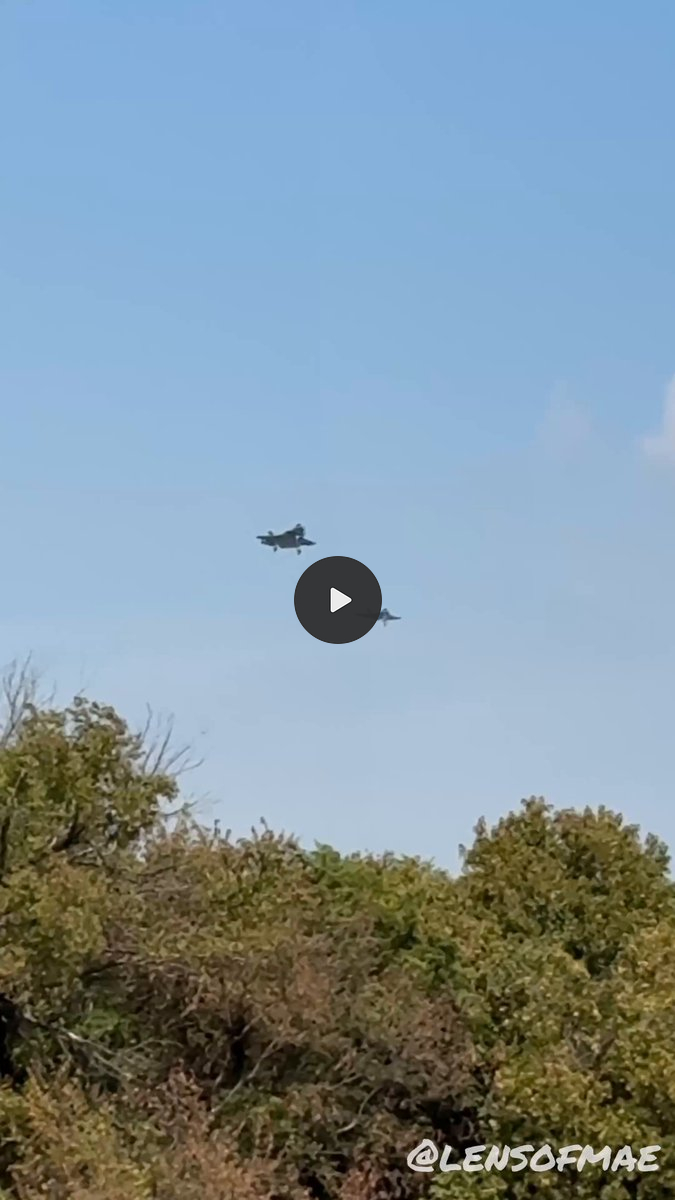
🍁 Kit for Canada. The first CF-35A, AR-1, flew for 90 minutes at Fort Worth on September 23 in full RCAF markings, but Canada remains contractually obligated to only 16 of the 88 jets, with the first aircraft on Canadian soil in 2028 and full operating capability in 2032 to 2034. The drone problem cannot wait that long. MINERVA’s Phase 2 challenge wants a Windows-based airspace picture that plans, deconflicts and controls UAS traffic and spectrum in 4D at TRL 5 to 9, with bonus points for NATO-sourced components and bids due October 21. The notice admits the Army “has purchased foreign robotics and autonomous systems of varying quality.” Canadian software shops, this one is written for you.

🍁 The kill zone. In Latvia, the Wall Street Journal watched a Danish company playing the enemy use a night drone raid to break the Canadian-led brigade’s lines and overrun a Spanish position. Canadian Leopards rolled without anti-drone nets or detection, one crewman expected a shotgun for counter-UAS, and M777s were spread 12 kilometres apart in pits up to three metres deep. Col. David Brassard concedes the brigade is not at its desired readiness. Gen. Jennie Carignan wants the UK-led Joint Expeditionary Force as a “menu of options” for testing new drones and counter-drone kit.

Jackson Moses on Anduril:
Western capital markets are solving America's many defense deficiencies, investing $10Bs in its industrial base, and, as always, negligent U.S. politicians, bureaucrats, and antiquated processes are blocking legitimate progress. D.C. is demanding venture capitalist, allocators, and operators shoulder all the risk, to the tune of $170B+ of investment since 2017 (when Anduril was founded), without any semblance of buyer guarantees.
🍁 Arctic endurance. Joint Task Force North’s new commander, BGen J.N.M. Parent, runs 4 million square kilometres across three territories and names the gap in one word: “Sustainment.” In his words, “Reaching the North is not the challenge; sustaining operations once there is,” which is why airfield assessments and Northern Operational Support Hubs come before new platforms. Foreign Affairs makes the same point from the US side, opening on a 2016 crack in the ice that ended the US Navy’s flagship Arctic exercise early north of Prudhoe Bay and an early freeze that trapped roughly two dozen vessels in the East Siberian Sea five years later. The Arctic punishes anyone who confuses presence with endurance.
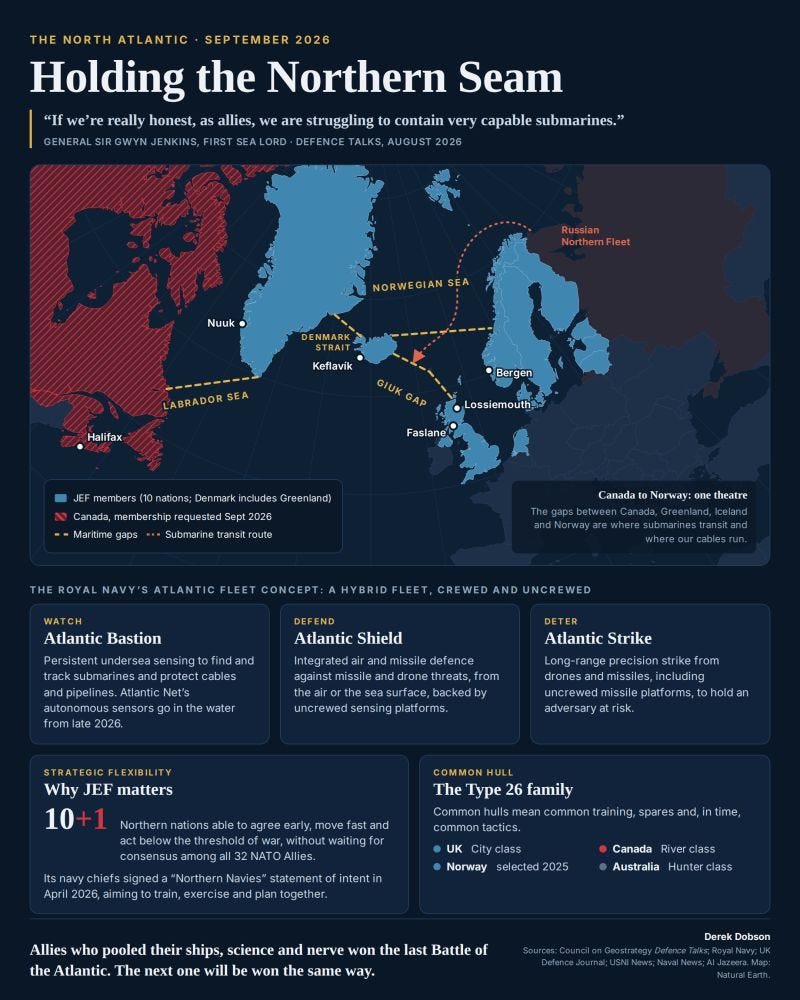

The Arctic Readiness Gap: Why Canada’s Defence Industrial Strategy Must Be Built on Northern Reality.
🍁 Home front. Carney told the New York Times he had prepared for the “extreme tail risk” of US military action against Canada, and CBC’s Murray Brewster explains that DND keeps a “vault full” of contingency plans that retired Lt.-Gen. Andrew Leslie says would have been pulled out after the Greenland threats. INDOPACOM’s Adm. Samuel Paparo called the scenario “absolutely and utterly preposterous” and asked about his “attack plans for the Martians.” Meanwhile the money is real: Canada hit $63 billion in 2025-26 and its real per-capita defence spending rose from 22% to 46% of the US level between 2014 and 2026, from US$598 to US$1,146 a head. Slovenia is now the only NATO member under 2%.
Autonomous air. Sweden’s Scaleout Systems flew a BAE Bofors loitering munition that found, ranked and bombed an armoured engineering vehicle with no comms in under 320 seconds, running YOLOv8 Nano on an Nvidia Jetson Orin Nano, after a -18°C Arctic strike demo and €100,000 from NATO DIANA. Notre Dame’s Amy McAuliffe documents where this is heading: Russia fielded a fully autonomous V2U in early 2025, and an AI-enabled drone whose software chose its own aim point killed three civilians at a Zaporizhzhia gas station. Eric Schmidt tells The Economist that the phase when Ukraine was the faster side is over, and that a human can oversee ten drones but not 1,000, which moves the operator from “in the loop” to “on the loop.”


Data is ammunition. Britain now gets secure access to Ukraine’s Avengers AI Labs, more than 5 million annotated battlefield frames drawn largely from the DELTA battle-management system, with up to a dozen UK companies invited to train comms-denied and GPS-denied autonomy inside a no-download perimeter. It is the first time Kyiv has opened that machine-learning infrastructure to a foreign government.
Ground robots. Forterra, the old Robotic Research that fired the first Javelin from an autonomous vehicle in 2004 and now employs more than 500, argues that warfare has automated everything “except one: the distribution of risk to the warfighter on the ground.” Ukraine agrees and is recruiting for what it calls a “Manhattan Project for Physical AI”, with an open call for robotics engineers, a CTO and co-investors under a blunt banner: “The enemy has learned to scale. We must be faster.”
Maritime autonomy. STARK’s new 12-metre Vanta 12 carries jammers, loitering munitions and MBDA’s Sea Venom anti-ship missile, sprints past 40 knots and patrols 1,200 miles for weeks, and was tested at REPMUS in Portugal for GIUK gap and Baltic shadow-fleet missions. The company was founded in 2024 and raised €500 million at €3.5 billion in June.
Axis watch. A canopy and weapons-bay door from an Australian F-35, shipped by UPS to the US for inspection in late May, were diverted to Hong Kong and are now held by Beijing. The same week, ShinyHunters leaked a roughly 5,000-line spreadsheet from what it claims is a two to three terabyte haul that maps FBI staff onto counterintelligence, China and Russia units, complete with addresses and Social Security numbers.
Wounded at scale. Drones caused an estimated 70% to 80% of casualties in Ukraine’s third year, and US wounded from the Iran war grew from about 200 in March to nearly 700 by August, most with traumatic brain injuries. Clinicians now describe “dronophobia” and sound-linked hypervigilance, and the authors warn that “the drone is a sustained condition, not a discrete traumatic event.”
Ukraine captured Russia’s new Geran 4 and took it apart, revealing a Russian weapon whose lethal anatomy remains strikingly international, packed with components originating in China, the U.S., Europe and beyond.
Video of Ukrainian drones set up and waiting to launch against Russian forces.
Sounds crazy: Ukrainian drones are now protecting artillery.
Ranked: Countries Importing the Most Military Drones.
Perry Boyle: The Challenges of Defense Tech Investing in Ukraine.
ADVERTISEMENT

Access a network of defence specialists that provide sector expertise, structured financing and strategic connections to help navigate the industry and grow. Click to connect.
🔫 Hot Shots
🍁 Changing perceptions. ONE9 founder Glenn Cowan, a 19-year CAF officer with 14 years in a special operations unit, explains how Kensington anchored ONE9’s first fund when other Canadian institutions would not touch defence, and why dual-use is the thesis: “Other than a kinetically offensive weapon, almost every piece of technology has applicability outside of the military.”
Cyber security roundup: More than 60 government IT tenders last week asked for a specific product by name… Flights delayed at major US airports after cable cut by construction workers… The DIU Bridge Program is announcing the Classified Access to Address Critical Technology “CLASS ACT” solicitation, a new pathway to increase the number of cleared nontraditional companies working with the DoW.
🍁 Canadians who deliberate want more defence. Global Canada and Stanford’s deliberative poll of 7,491 Canadians and 408 deliberators found support for 3.5% of GDP on defence rose from 6.5 to 6.8 out of 10 after a weekend of debate, while knowledge that Canada has no foreign human intelligence service jumped from 49% to 73%.
🍁 Former CSIS director David Vigneault on hybrid war. Now chief intelligence officer at Strider Technologies, he tells the BBC that Russia is working “to create dissensions” inside democracies because “the more fragile we are, the less we’re able to counter their aggressive actions.”
🍁 Deloitte and CADSI put a price on procurement reform. Canada’s 538 defence firms produced $11.1 billion of GDP and 81,800 jobs in 2024, but only 53% of procurement stays home, and hitting 5% by 2033 with 70% Canadian content adds $56 billion of GDP and 14,000 jobs a year over the decade. Germany cut timelines 37% with similar reforms.
Germany has Europe’s biggest defence budget, and startups barely see it. Keen Venture Partners’ guide shows €108.2 billion in 2026 flowing mostly to primes, partly because BAAINBw officials carry personal liability for procurement decisions, which pushes them toward proven suppliers. Sophia Hommels: “Little funding ends up going to startups versus the primes, because no one wants to take the risk.”
Africom stands up a Defense Economics Office. Gen. Dagvin Anderson calls economics an “acceleration lever” and wants the office to disrupt adversary revenue and de-risk critical-mineral value chains into the industrial base, building on Steve Feinberg’s new Pentagon economic defence unit.
SOCOM is rewiring the A-Team. After a roughly 14% cut in buying power and about 5,000 fewer personnel against 35% more demand, the debate is whether to bolt cyber, EW and drone operators onto 12-man ODAs or replace core roles.
Amprius’s CEO makes the battery pitch on CNBC. Tom Stepien walks through the $75 million grant, China exposure and military demand under a simple headline: “We are bringing drone battery production to the U.S.”
The alliance map just got more crowded. Visual Capitalist maps five mutual defence pacts, with the new Saudi, Türkiye and Pakistan Mecca Defence Alliance creating fresh overlap with NATO through Türkiye. A NATO member now shares a collective defence clause with a nuclear-armed non-member.
A primer on how seekers find targets. everything RF’s explainer on what a radar seeker is and how it guides a missile is a useful refresher for anyone reading this week’s germanium and ball screw stories.
And the closer: the chickens that nearly guarded West Germany. BBC Science Focus revisits Britain’s 1957 Blue Peacock plan for ten 10-kiloton nuclear mines whose circuits froze when buried, and the fix someone actually proposed: a live chicken inside each bomb to keep the wires warm for a week. It was cancelled as unethical and bizarre.
The Icebreaker is written for the people building Canada’s defence technology base. Forward it to someone who needs it.