

Editor’s note: Thanks to CCI and RBCx for hosting the dual-use tech and defence procurement exchange in Toronto last week. The Icebreaker was delighted to join the panel alongside DRDC & Plurilock.
🎯 Three-Shot Burst
As we await a roadmap for Canadian defence tech to find customers domestically — a document known as the Defence Industrial Strategy (DIS), due this week — it is worth noting that Canada’s most effective export weapon for defence startups isn’t a stealth drone or an AI sensor stack. It’s the Canadian Commercial Corporation (CCC).
Quietly, almost perversely, CCC has become best-in-class at helping Canadian defence companies sell into the United States. Canadian companies can contract through CCC and be considered US domestic firms for bid purposes — an agreement dating back to the end of WWII. It translates Ottawa credibility into Washington contracts, wraps SMEs in a sovereign-backed prime, de-risks FAR/DFARS anxiety, and gives US buyers a single throat to choke. For a Canadian firm trying to crack the Pentagon, CCC is not a “nice to have.” It’s a cheat code.
DARPA has also contracted with Canadian startups directly via CCC, avoiding the need to subcontract from a US prime or open a US subsidiary.
No equivalent apparatus exists to help Canadian defence companies sell to… Canada.
Reality check: At home, founders face a maze of fragmented procurement authorities, risk-averse program offices, glacial timelines, and pilot purgatory. Abroad, Canada shows up with a clean contract vehicle, political air cover, and execution discipline. Domestically, we tell our own companies to wait, resubmit, or scale elsewhere.
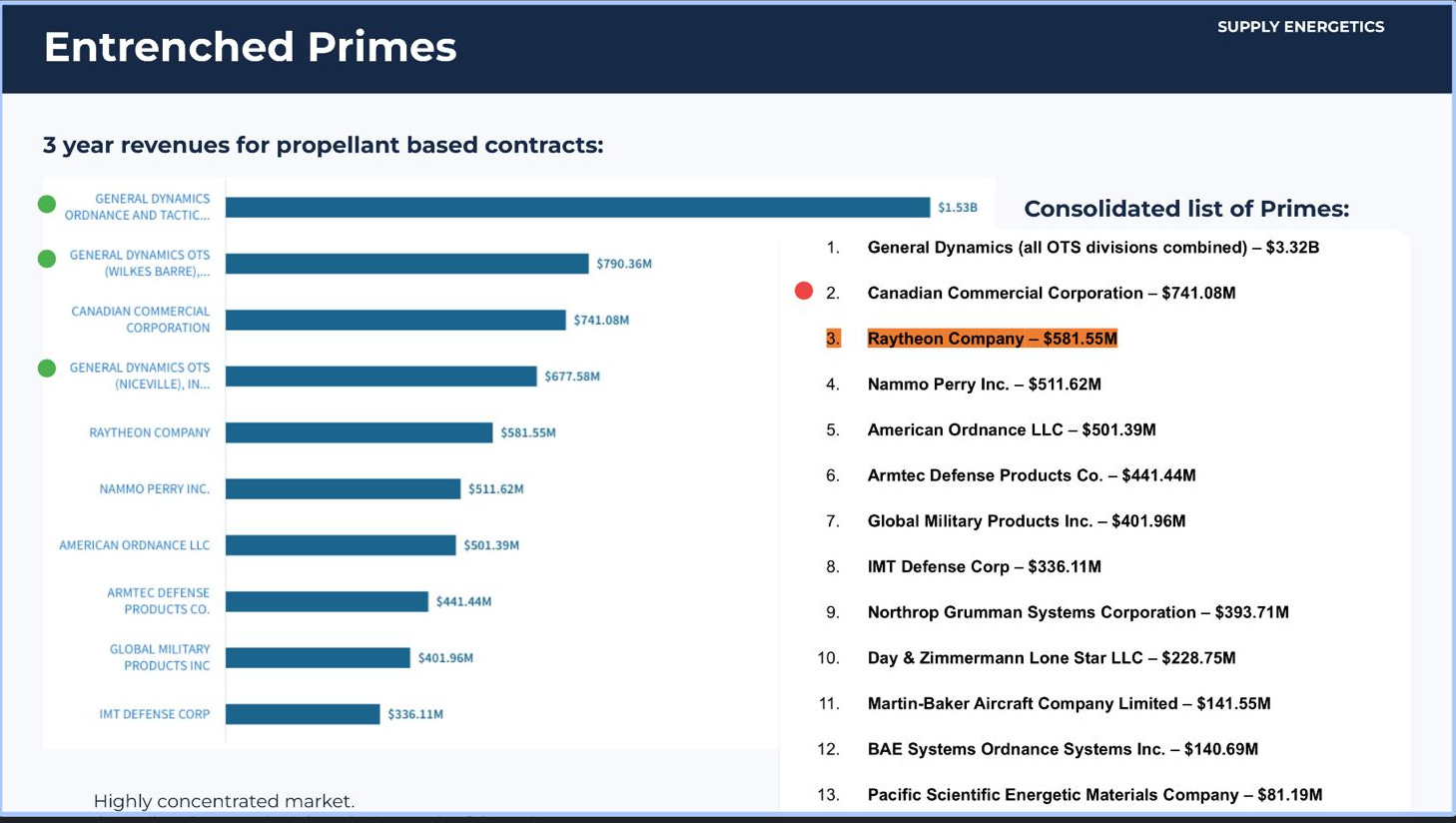
Bottom Line: We have built a world-class export bridge to the US defence industrial base—while leaving a moat between Canadian innovators and the Canadian Armed Forces. If you’re a defence founder, the fastest way to sell to Canada may still be to sell to America first. Here’s hoping the DIS changes that!
In the meantime, if you’re looking to connect with CCC, let us know. We have been pipelining Canadian defence startups to the excellent team there since our national mapping exercise last summer.

Related:
US DIU looking for Containerized Autonomous Drone Delivery System (CADDS) — this opportunity is open to Canadian firms
Hunt For Container Launchers Packed With Drones Kicked-Off By Pentagon
Fredericton-based defence accelerator set to launch with $1-million in federal funding
Canada’s Race to Rebuild Military Triggers a Defence-Tech Gold Rush
Minimum Viable Product and Canadian Defence Procurement - A Conundrum
Montreal’s Galvion, through U.S. reseller, is supplying US$15.5M of ballistic helmets to ICE

ADVERTISEMENT

Dominion Dynamics is expanding our team and we’re looking for ambitious Canadians who want to build sovereign technology for the future of national defence.
💾 Announcing the 2026 Red Team Hackathon Series
A national defence-tech innovation challenge for Canada’s brightest entrepreneurs, startups, and future leaders. This national series brings together entrepreneurial teams and early-stage startups from across Canada to compete for $200,000 in prize money, potential grants, and exclusive internships.
Modern Canadian Armed Forces (CAF) operations involve a growing mix of drones, ground robots, vessels, sensors, and networked platforms operating in complex and contested environments. In these conditions, misidentification of friendly, civilian, or unknown systems—or the loss of situational awareness—can create operational friction, delays, and mission risk.
Kickoff Event: March 7, 2025 | University of British Columbia (UBC), Vancouver, BC
Subsequent events scheduled for Calgary, Ottawa, Toronto, Montreal, and New Brunswick throughout 2026.
Your Mission
Build Find My Force — a secure, intuitive system that allows authorized users to identify, verify, and track platforms in real time, even when systems do not actively communicate, network connectivity is degraded, or platforms operate across domains.
What’s at Stake
Compete for a $20,000 prize pool at Vancouver’s kickoff event, an invite to the National Final in Ottawa, and help shape the future of multi-domain situational awareness.
Application deadline is February 20.
Marketing Partner: The Icebreaker
Presented by: Remote Robotic Systems
Sponsored by: AVSS, Orqa, ThinkOn, and NORRG
👉 Register Now: www.redteamhack.ca
🤝 Deal Corner
FT on Carney’s ‘art of the deal’: Canada leverages subs contract for auto investment
Canada is playing hardball with a $40bn submarine contract as it tries to turbocharge investment in civilian sectors ranging from steel and cars to energy and mining, and boost its economic independence from the US.
“Carney is capitalising on a unique moment of opportunity afforded to Canada by this bidding war,” said Xavier Delgado, a fellow at the Conference of Defence Associations Institute in Ottawa. “This is his version of the art of the deal.”
Signs of Life: The submarine mega-project is an element of Canada’s largest defence investment drive since the Second World War. As part of its plan to reduce its dependence on the US and double trade with non-US partners over the next 10 years, Ottawa is also revisiting a contract to buy 88 F-35 fighter jets from the US.
Related:
How to become a supplier in the Canadian defence supply chain… Wake up call for Canadian tech startups
Skyryse Raises $300M Series C… RADICL Raises $31M Series A… Overland AI Raises $100M… Whitespace Raises $3.2M Seed
Hobbit-Inspired Startup Becomes First New Bank Greenlighted by Trump 2.0
Investigation: 80% of Russian Troops’ Linkups on the Front Line Produced by U.S. Company Ubiquiti
Space corner: Rheinmetall and OHB in talks over Starlink-style service for German army… German firm to build two-stage hypersonic plane with horizontal takeoff and landing… CesiumAstro raises $470 million to build out low Earth orbit satellites… Space economy hits $626 Billion “Inflection Point” on path to trillion-dollar era


Niagara College launches drone and defence tech programs
Canada’s MDA Courts Global Talent in Defence-Driven Space Boom
Western helps drive national defence research with new international partnership
Salaries soar ‘astronomically’ as defence techs fight for talent
Volatus announces Task Force Drone for Military Veterans, a specialized training program designed to help Canadian veterans successfully transition into civilian drone careers
A short list of US-based defence accelerators
UK defence prime BAE Systems launches incubator, ‘actively looking’ into VC fund investing
Patient Capital Will Eat the World… A16Z state of the markets report
Calian-led $100M investment aims to help defence-tech SMEs avoid the ‘supply chain trap’
Euro trip: The rise of Europe’s war startups… Why European Deeptech Pre-Seed Looks Like US Cloud in 2010… From arms to orbit: Rheinmetall’s expansion unsettles rivals… UK launches £20m fund to accelerate defence contracts for British startups… The UK Enters the Dragon’s Den… Russian spy spacecraft have intercepted Europe’s key satellites, officials believe… Poland Inks $4.3 Billion Deal for ‘Drone Wall’ to Deter Russia… Tank maker KNDS dismisses investment interest from rival Rheinmetall… Germany eyes lasers, spy satellites in military space spending splurge… ‘Mix-and-Match’ Naval Fleet Concept Takes Shape in Denmark
Yaroslav Azhnyuk: From Consumer Hardware to Battlefield Autonomy
Edmonton’s Wyvern was recently assessed through ESA’s Earthnet Data Assessment Project (EDAP+), which evaluates Earth observation missions and the data they deliver for accuracy, reliability, accessibility and more. The EDAP+ review found that its data quality meets ESA’s Best Practice Guidelines and EO Mission Data Quality Assessment Framework
Shoutout to our pal Alex Lee on the launch of Frostbite, a new Canadian defence VC
Doug Horn at Clairvest shares the Canadian firm’s top aerospace and defence charts of 2025
Building Bloc, a BC-based company assembling mobile microfactories with 3-D printers that can manufacture prosthetics at unmatched speed and cost, is looking for a CTO
Province throws support behind private sector bid to bring NATO bank to Vancouver
ADVERTISEMENT

Join Canada’s innovation leaders at the N³ Summit in Toronto. Promo code: Icebreaker10
💳 NATO’s buying spree is booming — and Canada is barely at the table
A deep dive into €39B of NATO procurement shows spending has tripled since 2020, hitting Cold War–era levels. Germany is vacuuming up over a third of recent contracts. The U.S. is slipping. Canada? Sitting at 0.3% of current awards — wildly below our ~6.7% share of NATO GDP.
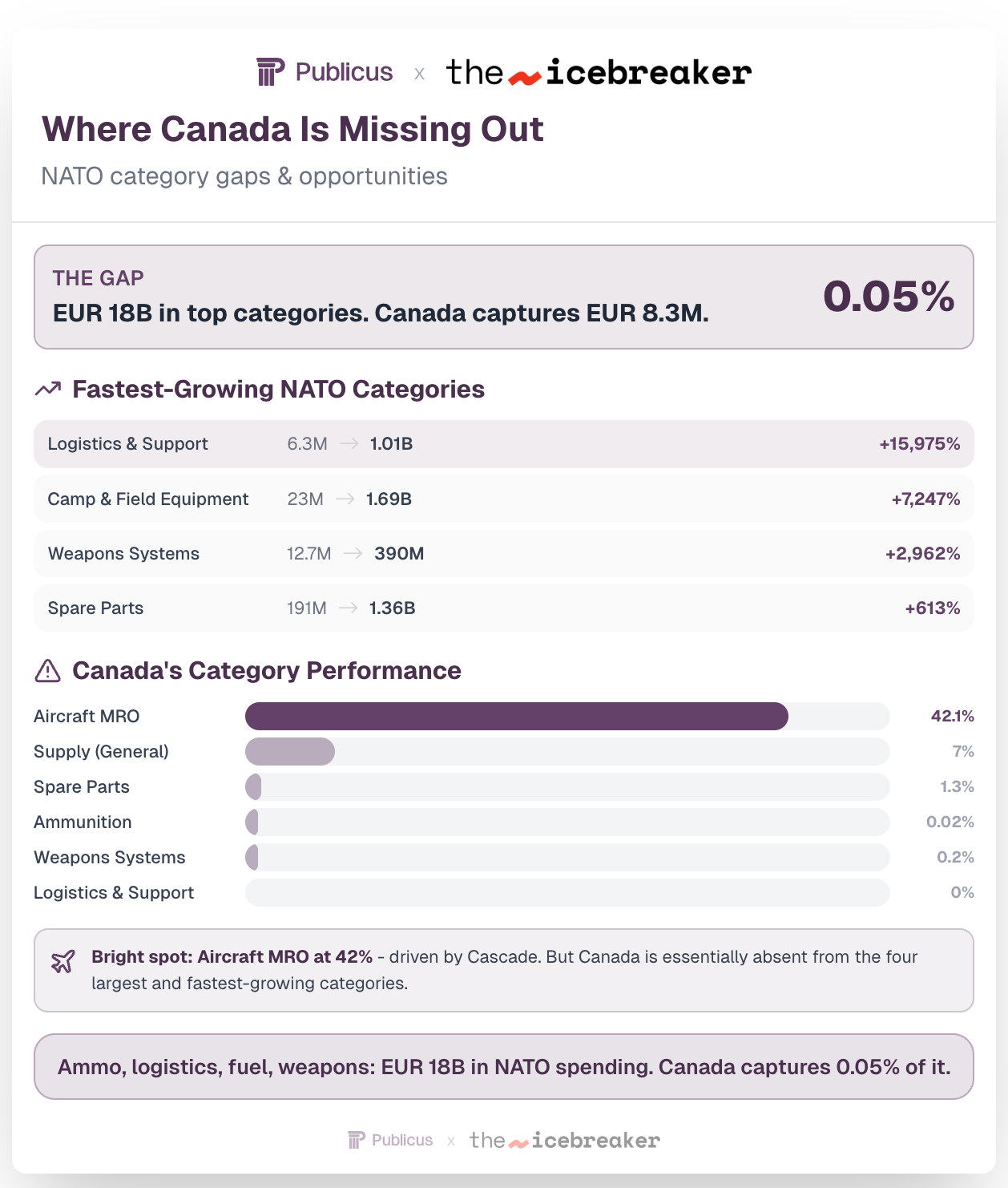
Why the gap: NATO buys are delivered to Europe, freight included. That structurally crushes Canadian manufacturers shipping heavy kit across the Atlantic. Unless you’re truly irreplaceable, geography beats price.
Where Canada does win: niche manufacturing (Cascade’s C-130 maintenance), specialized components, spare-parts brokering, and software, IT, and services where shipping costs vanish. Strip out one blockbuster contract, and Canadian SMEs are almost invisible.
Add a final wrinkle: Canadian defence champions are quietly being sold to foreign private equity, hollowing out domestic capacity just as NATO demand explodes.
Bottom line: NATO procurement is growing fast, but it’s not “Buy Canadian.” Without unique capabilities or a pivot to software and services, Canada risks watching the rearmament boom from the sidelines.
Special thanks to Joe Noss for this research. For the full special report, visit Publicus.
ADVERTISEMENT

Visit our website here.
⚔️ Combat Readiness
3 accused in Ontario explosives investigation were developing anti-drone weapons system
The three Ontario men accused of storing materials that could be made into explosives had been looking for money to back the production of a military system designed to prevent drone attacks. The pitch video also sheds light on the backgrounds of the three men accused in the crime:



Bottom Line: Being a fast-growing startup is not a charming exemption from the law. If your company’s operations are not legal, it is difficult for anyone to invest in you let alone buy the products you sell. Especially so in defence.
Related:
Palantir CEO Alex Karp calls out Canada, says Trump has a point about the AI race: ‘There’s a real hesitance to adopt these kind of products in the West’
Ottawa advised to choose champions and spend big to build AI industry…
a16z-backed Galadyne Enters the Missile Game… US Air Force tests new, rapidly developed cruise missile
US used cyber weapons to disrupt Iranian air defences during 2025 strikes
Josh Ogden thinks Canada’s drone industry can gain some altitude
Meet Seeing Systems, Y Combinator’s Newest Drone Startup
Dominion Dynamics: Forging the future of interoperable, attritable systems for Arctic and Allied defence
A Wargame Shows Just How Vulnerable Europe Is to a Russian Attack
With dense air defences and constant surveillance, can air assault still work?
Why defence and resilience tech companies live or die by manufacturing scale
Machina Labs plots huge robo-factory with $124 million raise
Logistics Left of Boom: Understanding Adversary Threats to the Defence Industrial Base Ahead of Conflict
China Has Built a Regulatory Kill Switch for American Military Production
Unrestricted Innovation: The Supply Chain Battlefield
In just two months since deployment, the United States Department of War’s enterprise AI platform, GenAI.mil, has surpassed one million unique users… Pentagon clashes with Anthropic over military AI use, sources say
Canadian bacon: Is Canada’s Artillery Modernization Headed for the Same Pitfalls as the F-35?… Bombardier to buy U.S. jet service provider amid White House threats to decertify planes… New submarines will require extra gear after delivery to operate under ice, navy head says… McGuinty: Ottawa remains opposed to acquiring nuclear weapons… An era of ‘wrecking ball’ politics: What the Munich Security Report says about Canada’s moment of reckoning… How the synthetic environment can shape the future of Canadian defence… Why Canada needs a foreign intelligence service… Canada is uniquely unprepared for the dire national-security crisis we are now in… If Canada expects young people to defend national security, we must improve their financial security… Canada delays destroying WW2 pistols while Ukraine figures out if it wants them
Critical minerals: Even when a Canadian mining giant controls world-class assets, decisions about which country benefits are ultimately made elsewhere – even in the Oval Office… Mariana Minerals is attempting to rebuild U.S. critical-minerals production under severe time, labour, and political constraints… Leapfrogging China’s Critical Minerals Dominance… Australia’s Critical Minerals Reserve: What are the Lessons for Canada?… Trump’s Project Vault Gives US Critical Mineral Startups a Boost
Drone wars: InDro Robotics Founder Philip Reece discusses the evolution of autonomous defence, drone swarms… Agent-Based Anti-Jamming Techniques for UAV Communications in Adversarial Environments: A Comprehensive Survey… Russia just demonstrated an FPV strike launched from a USV mothership [VIDEO]… The War in Ukraine and NATO Defence Innovation… Airbus’ giant drone ‘mothership’ with big belly for UAV swarms targets 2029 debut… ICYMI: Pentagon Announces Drone Dominance Vendors… Swarmer files for IPO… Russia’s drone pipeline from Iran… Northern Michigan site designated as testing range for military drones

Arctic corner: Baffinland gives green light to rail line to boost mine’s output, lifespan… Canada is under threat—and the U.S. is not our biggest problem… NATO is readying soldiers for a frozen Arctic war. It means learning to fight on skis and snowmobiles… Collaboration, not exceptionalism, is the key to Arctic peace… Fears grow that Russia will deploy more nukes in the Arctic as New START Treaty expires… Norway says it expects more Russian spying in the Arctic, sabotage activity… CCGS Naalak Nappaaluk – Canadian Coast Guard places large offshore science vessel into service
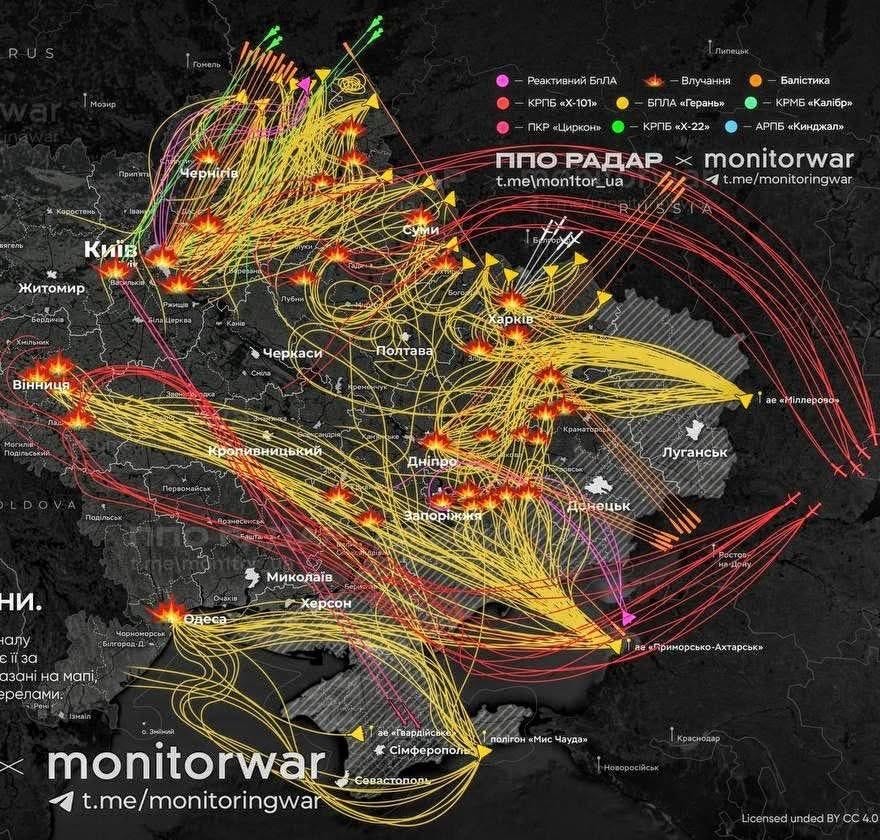
From the front: Up to 60,000 engines per month thanks to investments — foreign venture funds are entering the Ukrainian components market… Russia’s air defence vulnerabilities and weapons smuggling… Is the Age of Drones Really the Age of Poor Maneuver?… Serious ballistic-missile threat alerts now outnumber those for drones in Ukraine:
No place for politics in F-35 cockpits as Canadian fighter jet pilots get ready to train at U.S. base… The Price of Dependency: What the Swiss F-35 Experience Reveals About American Power, Control, and Strategic Asymmetry… Saab Says US-Canada Row Bolsters Swedish Fighter Jet’s Prospects… Canada Looks Set to Cut Big F-35 Stealth Fighter Order By More Than 50 Percent… What does the RCAF Commander actually want?
US Air Force eyes improved comms with bombers after Midnight Hammer


ADVERTISEMENT

Canada Rocket Company is building our sovereign launch capability. We’re hiring 10+ roles. Apply here.
📋 New Ombudsman Report Warns of Longstanding Inequities Facing Primary Reserve Members
The Office of the Department of National Defence and Canadian Armed Forces Ombudsman has released a new systemic report, Marking Time: A Decade of Stalled Progress for the Primary Reserve. This report highlights persistent inequities affecting Primary Reserve (P Res) members nearly ten years after the Office first brought the issues to light.
Despite repeated commitments from the Canadian Armed Forces (CAF) to improve support for Reserve Force members injured or made ill through military service, the report finds that little meaningful progress has been made since key investigations were completed in 2016. The earlier reviews—Compensation Options for Ill and Injured Reservists and Part‑Time Soldiers with Full‑Time Injuries—identified gaps in governance, inconsistent access to health care, confusion around entitlements, and systemic administrative delays. Today, according to the Ombudsman, those same issues continue to harm reservists and undermine confidence in the CAF’s ability to support its own people.
The new review, launched in 2024, examined why recommendations from 2016 remain unimplemented and assessed whether they are still relevant. After interviews with CAF senior leaders and months of research, the conclusion was unequivocal: the problems persist, and the recommendations must be implemented.

The report identifies four major systemic barriers that have stalled progress:
1. Governance: Fragmented authority and inconsistent leadership direction have allowed Reserve-related issues to drift without clear ownership. Without a coherent employment model for the Reserve Force, policy alignment and timely decision‑making remain difficult.
2. Cultural Divide: Enduring bias toward Regular Force members has created institutional blind spots that disadvantage reservists—particularly around benefits, compensation, and recognition. Many Primary Reserve members reported feeling undervalued in comparison to their Regular Force counterparts, with some even describing themselves as “second‑class citizens.”
3. Resourcing Constraints: Years of staffing shortages, especially in health services, human resources, and administrative roles, have created delays in policy development, medical access, and compensation claims—issues that directly affect members’ financial stability and well‑being.
4. Administrative Complexity and Digitization: Outdated policies, unclear directives, and manual, paper‑based processes continue to impede modernization. These gaps are especially harmful to part‑time members, who often have limited access to CAF systems and rely heavily on accurate, up‑to‑date guidance.
The report shares troubling examples of reservists facing financial hardship due to delayed or mishandled compensation claims.
To break the cycle of delays and inequity, the Ombudsman is issuing five renewed recommendations for the CAF to implement by January 2027. These include strengthening governance of Reserve Force Compensation, completing long‑overdue digitalization of the Reserve Force Compensation application process, centralizing information on benefits, updating health‑care entitlement policies, and improving communication with members, especially those transitioning out of service.
As Canada continues to rely on P Res members for domestic operations (natural disasters), international deployments, and support to the Regular Force, the report underscores a simple message: meaningful change is overdue, and the time to act is now.
🔫 Hot Shots
Grey war: Redefining cyberspace as a battlespace… Hackers see opportunity in the Winter Olympics and Super Bowl… Anthropic’s new model is a pro at finding security flaws… US Senator says AT&T, Verizon blocking release of Salt Typhoon security assessment reports… Leaked technical documents show China rehearsing cyberattacks on neighbors’ critical infrastructure… U.S. Cyber Command’s new cyber force generation model… Cloud sovereignty is no longer just a public sector concern… Foreign adversaries are using fake jobs and consulting gigs to coax secrets from former U.S. officials… US Air Force Reserve Activates First Offensive Cyber Operations Squadron… The New Frontline: Technology Is a Modern Warfighting Domain… Chinese phishers impersonate U.S. policy briefings… Mechanized Propaganda: The Automation of Information Operations and Implications for U.S. Defence Doctrine


AI advancing: xAI co-founder tested Claude 4.6 on theoretical physics and says it does multi-page calculations without mistakes now. Thinks a “Claude Code moment for research” is close… At a closed-door meeting at the IAS, top physicists privately admitted AI does ~90% of their work… Axiom’s AI autonomously proved an open math conjecture end-to-end in Lean, with no human guidance. First time that’s happened in research math… China has launched its own Genesis Mission and state-backed startup DP Technology just raised $114M to build “AI for science” infrastructure… What does it all mean? Scientific discovery is about to be a compute problem: more inference will equal more breakthroughs

Uh oh: Mathematician Who Warned of Regime Infiltration of Canadian University Engineering Program Missing in Suspicious Disappearance… China’s disappearing generals… China’s intelligence community [infographic]… Budget watchdog says NATO 5% pledge to hike deficit by $63B… Trump’s methods offend, but his diagnosis of freeloading allies and a failing international order may be uncomfortably closer to reality… Botched CIA Communications System Helped Blow Cover of Chinese Agents
Going nuclear: Newly Unbound, Trump Weighs More Nuclear Arms and Underground Tests… US accuses China of secret nuclear test as Trump admin calls for broader nuclear weapons agreement
Adapt: Adapting Canada’s Trade Diversification Strategy in an Era of Strategic Interdependence
Odds & ends: Forging the Foundations of Canada’s Submarine Future… Force Development: Sustaining Canada’s Future Submarine Fleet… Free virtual event on modernization and the role of Canada’s aerospace industry featuring Major General Jeff Smyth, RCAF (February 19)
If you’ve got battlefield intel, classified tips, or just want to call in an airstrike on our typos, hit “reply” and sound off. Whether it’s a new tech sighting, a rumour from the mess hall, or feedback on our comms, we want your SITREP.
An interesting article, at CMC Microsystems we propose a development program, called DUET, with a few guidelines you might find useful
- a focus on civilian emergencies and disaster recovery first, so that products can find a market before going through procurement hurdles
- challenge calls to solve specific problems and subsidies to Canadian SMEs responding to the calls
- technical support from national and international networks to ensure that the solution proposed has all of the technical elements required; Edge AI, sensors, lasers, imagers, etc
- follow through on the project to field trials and a TRL/MRL of 7 so that technology is ready to sell by the end of the project
This approach has the potential to accelerate Canadian design and manufacturing capabilities for safety, sovereignty, and security.