

🎯 Three-Shot Burst
Guzman is out. Fuhr, the F-35 skeptic, now owns the file.
Doug Guzman is stepping down as CEO of the Defence Investment Agency less than a year after Ottawa stood the organization up. Days later, CBC profiled Stephen Fuhr, the former CF-18 pilot known for opposing the F-35 buy, who now runs the agency day to day. He inherits a file where Ottawa has locked in only 16 of the 88 F-35s once promised, with 72 more under review.
A former Canadian military commander turned venture capitalist on how to disrupt defence procurement
Allen-Vanguard goes into receivership owing more than US$80 million.
Ottawa-based counter-IED pioneer Allen-Vanguard entered receivership on September 1, with the Ontario Superior Court appointing PwC after lenders owed roughly US$80 million applied for court protection. The company has run out of Ottawa since 1981, keeps an engineering site in Tewkesbury, UK, and lists more than 30 end-user militaries from Australia to Saudi Arabia, yet carried only about 50 full-time staff as of late July. The Logic calls it a rare Canadian defence-industrial failure landing in the middle of a spending boom.
Canada goes all in on Poland.
Defence Minister David McGuinty and Trade Minister Maninder Sidhu lead a trade mission into MSPO as its designated lead nation, more than 200 organizations and nearly 500 delegates strong, up from the 170 companies Ottawa announced in June. Army Recognition’s numbers go further: the delegation has grown to 250-plus organizations and 500 people, with 90-plus Canadian exhibitors inside the national pavilion, and Poland’s SAFE allocation lets Canada count up to 80% Canadian content versus the standard 35% third-country ceiling, a first for any non-European nation. Underneath the trade mission sits the Defence Drone Initiative, which LGen Darcy Molstad says drew 527 companies and more than 1,000 bids for a supply arrangement closed in two months, a process that normally takes two years. “In an era of accelerating technological change, agility is becoming a capability in its own right, and perhaps the most important one of all,” Molstad wrote. Two of DDI’s freshest qualified suppliers, Base Camp Connect and Marconi Technologies, make their first joint MSPO appearance. Expect a wave of DDI contracting awards to be announced this week.
ADVERTISEMENT

Up to $1M in funding and additional technical services available for technologies with defence and civilian applications. Advisory support is available now.
🤝 Deal Corner
🍁 NorthStar drops its own satellites, banks on a $300M SPAC instead.
NorthStar Earth & Space and Kepler Communications agreed that NorthStar will host its space-domain-awareness sensors on Kepler's satellites rather than fly its own, after NorthStar's original sensors underperformed on Spire Global spacecraft, one failing outright and three missing image-quality targets. An ICC arbitration panel awarded Spire roughly US$12 million on a counterclaim after NorthStar had sought nearly US$46 million. NorthStar is separately merging with Viking Acquisition Corp. I at a C$420 million valuation, targeting a listing this quarter. CEO Stewart Bain: "we can deploy faster, scale more efficiently, and deliver information when it matters most."
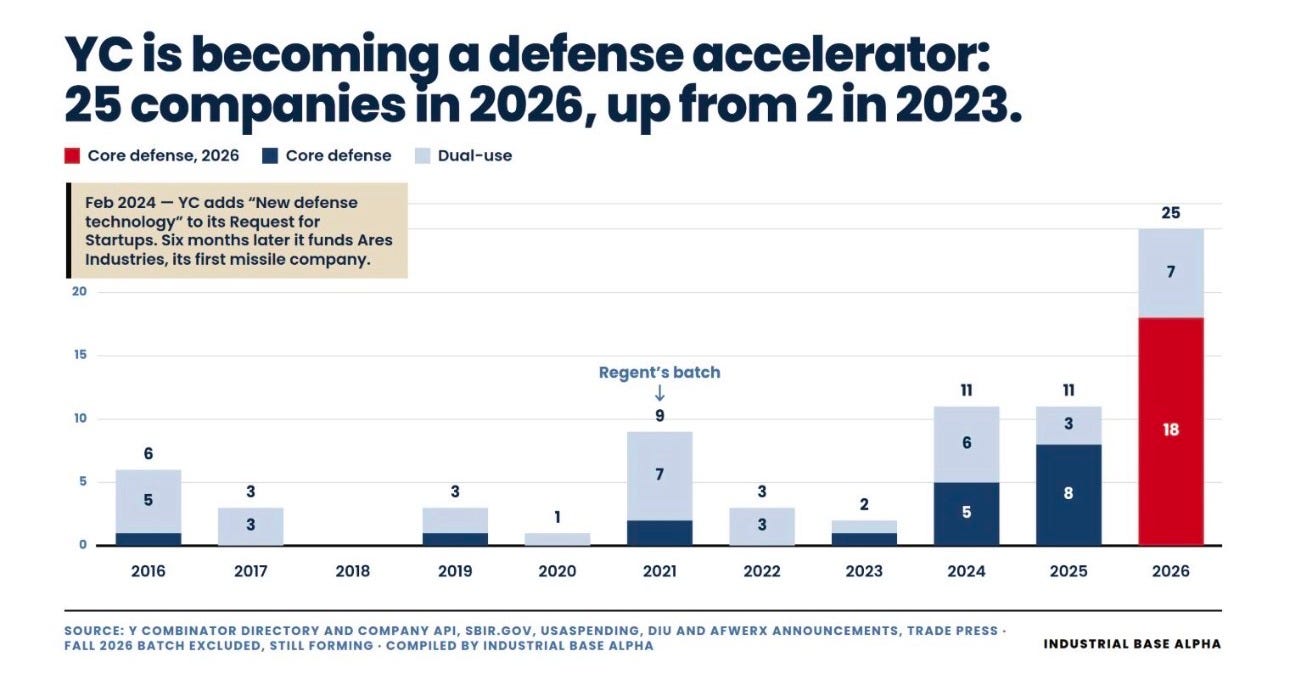
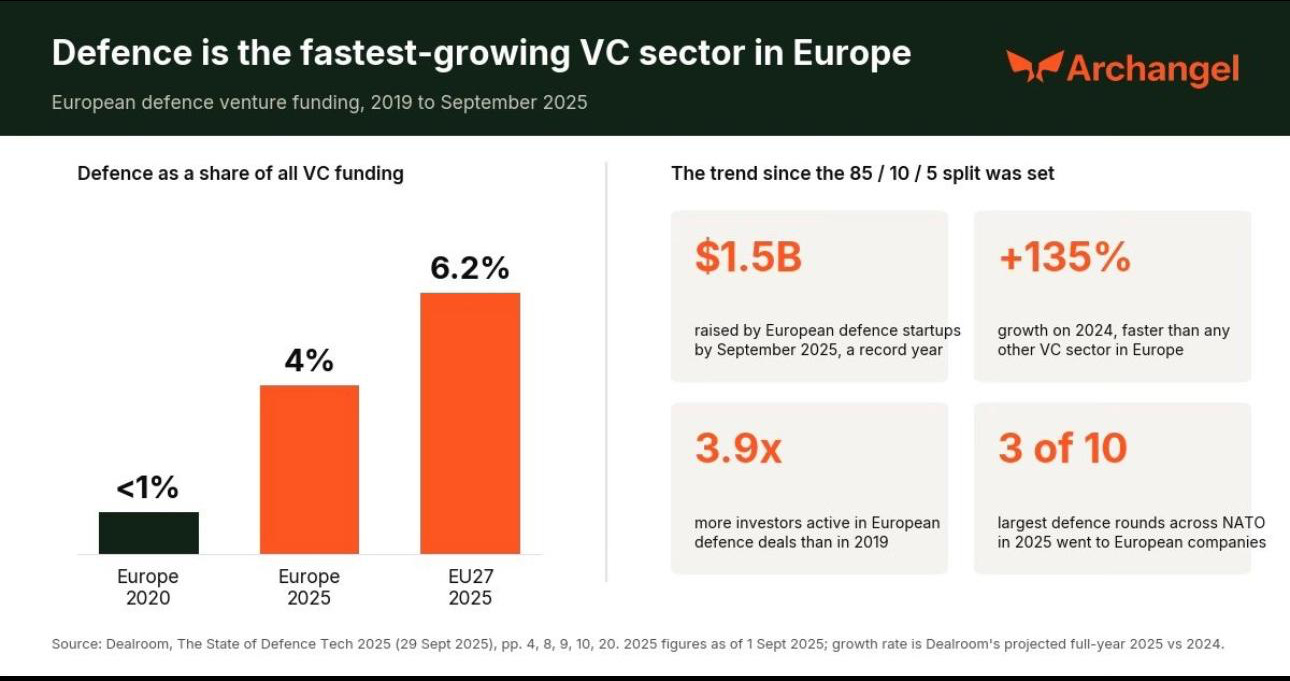
Is it still VC? Sam Burrell argues that “the number of defence tech fundraises continues to increase… little of this looks like venture capital anymore. That’s because once the financing need changes shape, the cap table has to change with it. And the people who like to fund factories are banks, credit funds, sovereign and pension pools etc.”
Defense Tech Doesn’t Have to Be Born in California

🍁 Isar Aerospace and Maritime Launch buy two more weeks to lock down Nova Scotia.
Isar and Maritime Launch Services pushed their statement-of-work deadline to September 15 from September 1, with the launch pad still due to reach Isar by November 1. The delay landed right as Isar's Spectrum rocket reached orbit for the first time on its second flight from Norway, deploying five satellites and validating the vehicle behind Isar's roughly C$155 million, 10-year Nova Scotia launch deal.
American nuclear fusion history has just been made… by a company from Montreal

🍁 Quandela puts Canada’s first photonic quantum computer on federal soil.
Quandela signed with CMC Microsystems to join Canada’s Quantum Computing Sandbox as the first photonic system on the federally funded FABrIC network, pitched explicitly on sovereignty: users’ “work and data [will be] entirely hosted on Canadian soil.”
🍁 Base Camp Connect and Marconi pair up on tactical comms ahead of MSPO.
Lévis-based Base Camp Connect and Montreal-based Marconi Technologies are pairing BCC-NOMAD vehicle systems with sixth-generation ORION radios for a joint MSPO debut. “In modern warfare, the ability to communicate is the ability to act,” said Base Camp Connect president Jean-Philippe Grondin.

🍁 Volatus and InDro both land DDI Marketplace status.
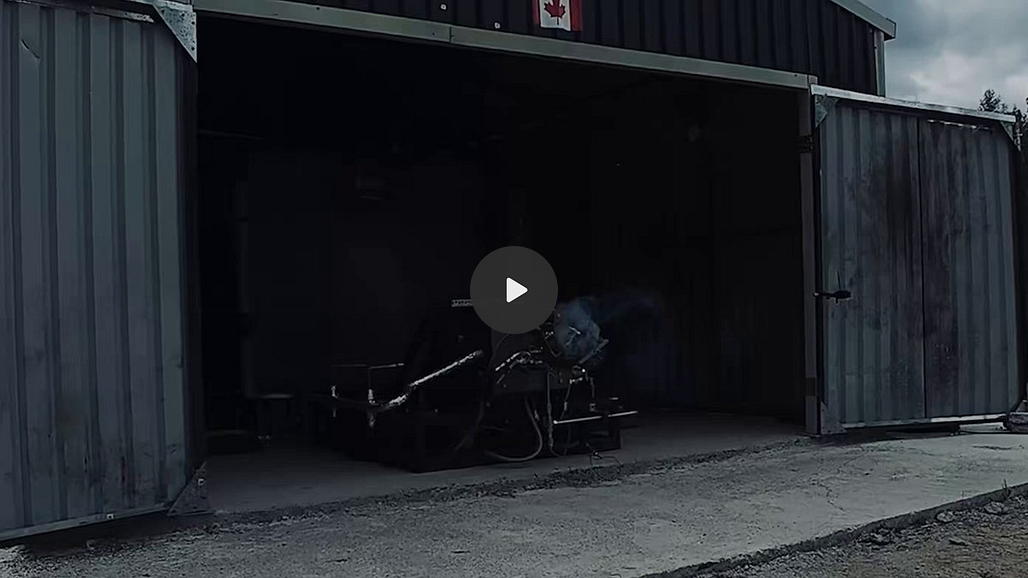
TSX-listed Volatus Aerospace qualified as a supplier under Canada’s Defence Drone Initiative Marketplace via competitive federal review, joining InDro Robotics, which won the same qualification days earlier.
Karp personally bets on Fedorov’s next act.
Palantir CEO Alex Karp will be the first major investor in a new defence technology company from Mykhailo Fedorov, Ukraine’s tech-forward former defence minister dismissed in July. The commitment is personal, not corporate. Karp to Fedorov: “You and your colleagues are launching a company that I think will be defining for the world.”
Germany hands Auterion and Airlogix $300M to mass-produce strike drones.
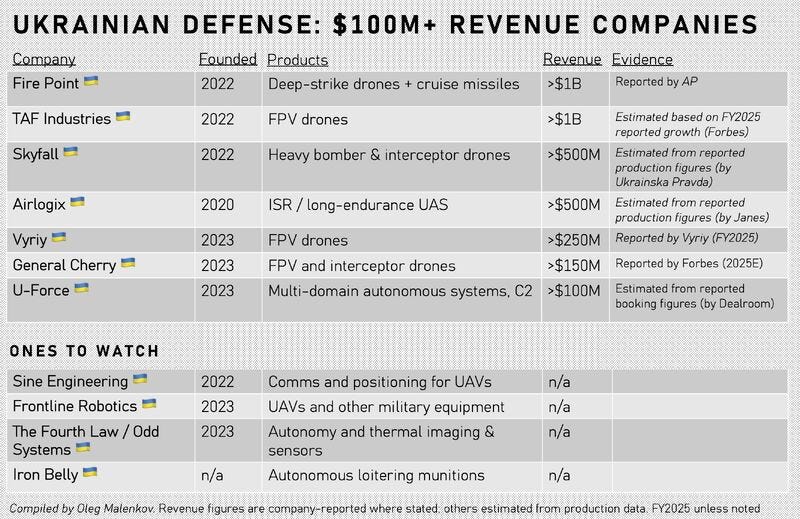
The Auterion-Airlogix joint venture won a $300 million German Ministry of Defence contract to serially produce more than 5,000 AI-guided long-range strike drones, the first such units built domestically in Germany and shipped straight to Ukraine. Auterion CEO Lorenz Meier says Germany now has “a production line for affordable precision mass... at a cost and rate that makes deterrence something you can actually stockpile.”
TITAN moves to production on $192M split between Palantir and Anduril.
The US Army pushed its TITAN targeting node into production with $127 million to Palantir and $65 million to Anduril, covering eight systems over 18 months. “There will always be a human on the loop within this workflow,” said Maj. Dell Barnes.
AeroVironment lands the Army’s first laser production contract, worth $464.8M.
AeroVironment secured the Army’s first-ever production order for a high-energy laser weapon, a deal to deliver dozens of 30-kilowatt LOCUST X3 systems built to defeat drones at under $5 a shot.
Dataminr’s OSINT tool goes live across NATO, plus a $318M Pentagon deal.
Dataminr’s First Alert Advanced suite is going live inside NATO’s entire Maven Smart System, while a separate five-year, $318 million Pentagon contract extends the same tool to three million licensed users across the Department of Defense. CEO Ted Bailey says NATO is now the company’s second-largest customer.
When Regulation Becomes a Defence Risk
XTEND skips the IPO line, merges onto the NYSE for $1.5B.
Israeli drone maker XTEND completed a $1.5 billion reverse merger with a Nasdaq-listed real estate developer, landing on the NYSE as XTND with a Tampa, Florida production base built to read as a domestic US supplier to the Pentagon.

Rheinmetall delivers its first XM30 prototype into a $45B Bradley-replacement race.
American Rheinmetall handed the Army its first Lynx XM30 prototype on September 1, with seven more to follow against General Dynamics in a competition covering roughly 4,000 vehicles worth more than $45 billion.
Sweden signs a $732M HIMARS deal and locks in Finland on rocket artillery.
Sweden signed a SEK 7 billion contract for Lockheed’s M142 HIMARS, just over ten launchers plus ammunition, opening the door to Precision Strike Missiles with a 500-km range.

Beaten Zone closes Australia’s first dedicated defence-tech fund at AUD $26M.
Brisbane’s Beaten Zone Venture Partners closed its debut fund at AUD $26 million, citing PitchBook figures showing venture investors put USD $12.8 billion into defence in the first half of 2026 alone, more than five times all of 2022.


Related: smaller rounds this week included INLEAP Photonics, which raised roughly €20 million for laser counter-drone tech; Smack Technologies, which pulled in $61 million for a wrist-worn AI display; Israeli drone-OS maker AITAN, which banked $41 million; HyImpulse, which extended its Series A by more than €50 million; HiddenLayer, which closed $100 million for AI security; Easy Aerial, which raised $20 million; Korea’s Airbility, which raised roughly $4.7 million for counter-drone tech; Kepler Aerospace (a different Kepler), which raised $8 million for swarming satellites; Georgia Tech Research Institute, which won a $33.4 million Army integrator role that leapfrogs the usual primes; Elbit Systems, which won $270 million in ISR contracts; Lockheed, which picked up another $41.8 million across three Navy awards; and Israel and Greece, who sealed a €3.035 billion Achilles Shield deal for a national air-defence network.
ADVERTISEMENT
Remote Robotic helps Canadian organizations design, deploy, and scale remote robotic systems. We have several new opportunities to join a team that’s tackling complex challenges and building some really exciting technology.
Check out our open roles and help us shape what’s next.
⚔️ Combat Readiness
Kit for Canada 🍁: HMCS Robert Hampton Gray became the first RCN warship to change home ports through the Northwest Passage, departing Halifax August 16; the same bulletin bumps Primary Reserve education reimbursement from 50% to 75%, with the annual cap rising from $2,000 to $7,500. Roughly 400 NATO troops, but just 15 CAF members, are training around Narsarsuaq in southern Greenland for Arctic Shield, a footprint that undercuts Ottawa's own Arctic rhetoric. Saab is meanwhile pressing Ottawa to commit to at least 40 Gripens to justify a made-in-Canada production line spanning roughly 250 suppliers, the first Gripen line built outside Sweden. Saab CEO Micael Johansson: "Canada has to decide, [does it] want the sovereign aerospace industry and is that important to them?"
Ground robots 🍁: InDro’s Talos platform is built to run a 50-bed field hospital for 10 days on its onboard power alone, with a 7,000-km range; ground robots now make up half of the 42-person company’s business. The economics behind that bet are already proven in Ukraine, where ground robots have logged more than 100,000 combat resupply and evacuation missions at a fraction of the cost of risking soldiers.
🛡️ Evolution of Anti-Tank Guided Missiles: Direct Attack vs. Top Attack Capabilities

Prime time 🍁: MDA Space CEO Mike Greenley wants to build four to six Canadian suppliers into $1-billion companies working under MDA on different contracts, sized against MDA’s own run toward $10 billion in annual revenue. MDA is also pushing into Direct-to-Device satellite communications using the payload line built for Telesat’s 198-satellite Lightspeed constellation. Analysts are buying the growth story: RBC and CIBC pushed Calian’s price target above $105 on a CA$1.5 billion backlog.

Home front 🍁: Ottawa named ex-Google CFO Patrick Pichette CEO of the new Digital Transformation Canada, an agency that absorbs Shared Services Canada and the Canadian Digital Service to run how the federal government buys and uses AI. Twenty-three companies including OpenAI, Anthropic and Google signed onto Ottawa’s voluntary data centre principles even as more than two-thirds of Canadians tell pollsters they don’t want one nearby. Crypto4A’s CEO argues cryptography, not tanks, is Canada’s actual sovereign advantage, pointing to its FIPS 140-3 post-quantum hardware module. Ahead of Carney’s September 17 address to the European Parliament, MLI’s Ed Fast and Richard Shimooka warn Ottawa not to overweight Europe as a substitute security partner: continental Europe takes just 17% of Canadian arms exports versus 63% for the United States, even after a 77% jump driven by Ukraine shipments.

Software sovereignty: War on the Rocks’ sharpest read of the week argues European states depend on foreign suppliers for more than 80% of critical digital infrastructure, a dependency Canada shares almost line for line. The same week, a G7 cyber working group that includes Canada’s Communications Security Establishment told industry it can no longer afford to postpone the move to post-quantum encryption, warning of “harvest now, decrypt later” attacks; a companion primer walks through the countdown to Q-Day and why the timeline matters.
Canada’s Next Security Problem May Not Look Like War

The kill zone: Ukraine’s drone forces say they struck 58,465 Russian targets in August alone, nearly 1,900 a day, including 54 shadow-fleet vessels and 168 energy nodes. Air superiority is thinner than that strike count suggests: Ukrainian F-16 pilots are now flying some daytime sorties with guns only because of a missile shortage a squadron commander confirmed on the record. “Any aircraft without weapons is... useless.”
Stockpile paradox: A senior Ukrainian official says Kyiv’s Patriot interceptor stocks are “effectively at zero” after a week of EU and NATO meetings produced no new supply commitments. Kyiv has now formally asked Brussels to fund its first PAC-3 buy out of the EU’s €90 billion loan. Compounding the squeeze, Trump says Washington will seek back payment from Europe for munitions already sent to Ukraine, a retroactive bill that would land on every NATO PURL contributor, Canada included.
Europe rearms: The UK’s new defence space strategy commits more than £3 billion to space control, ISR and connectivity, including £880 million for space control alone and £30 million for the SaxaVord Spaceport in Shetland, a direct comparator for Canada’s own space-defence funding debate.


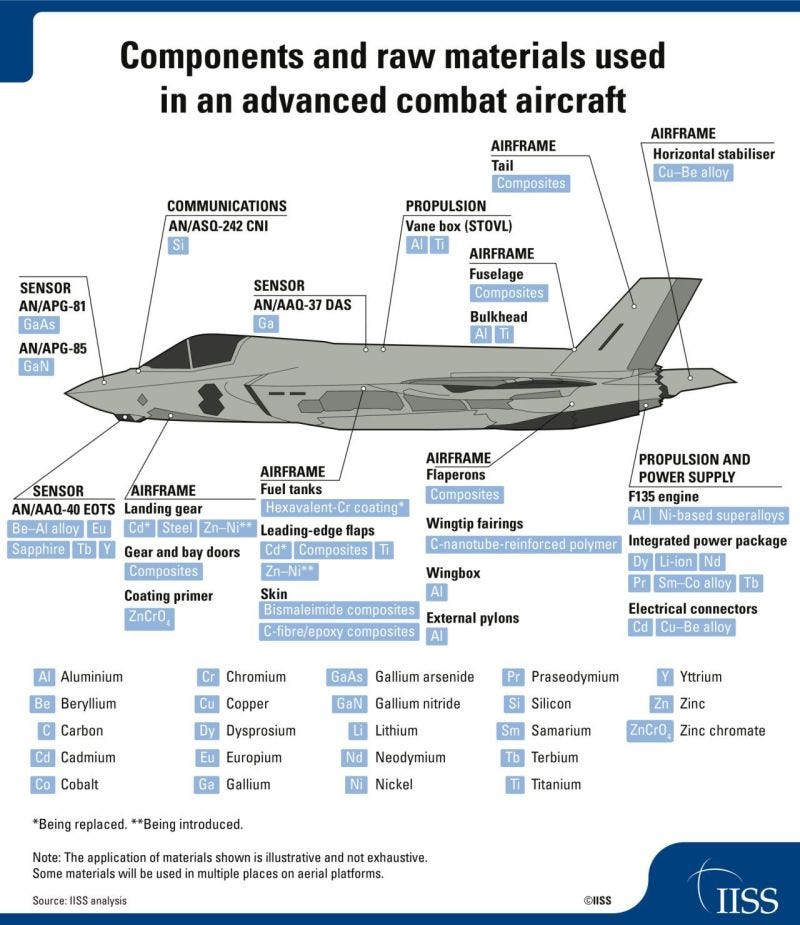
Axis watch: POLITICO’s exclusive found that a Chinese state-owned firm shipped 46 tons of carbon-fibre precursor to a sanctioned Rosatom drone plant, a load one nonproliferation expert says could supply as many as 1,300 Shahed-type drones. China is also squeezing rare-earth flows to the US, with terbium exports to Japan falling to zero, an opening for Canadian midstream players like Geomega, whose Montreal demonstration plant is now more than 75% built and producing 90%-plus-purity rare earth concentrate from bauxite residue. Ukraine’s own sanctions commissioner separately displayed foreign-made guidance components pulled from Russian Iskander and S-400 missiles, tracing back to the US, Japan, Germany, Taiwan, France, Britain and Switzerland.
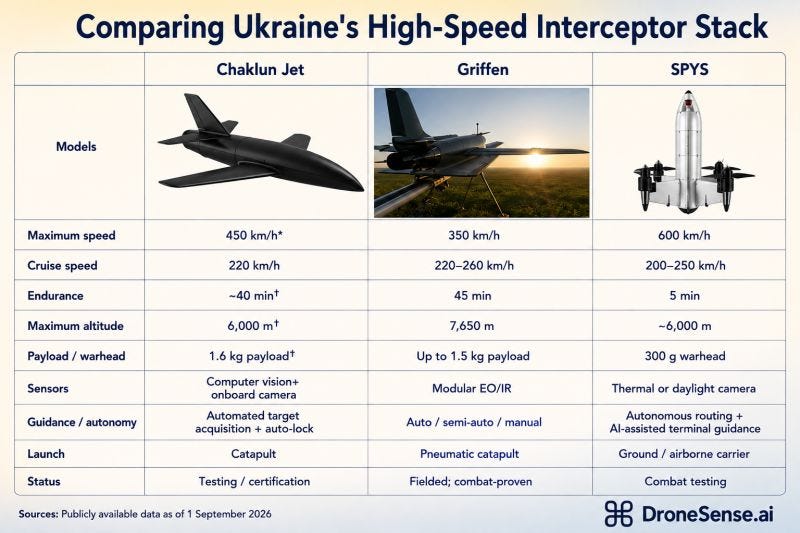

Counter-drone: Senators pressed the Army over killing its Ukraine-informed drone battalion, demanding a briefing by September 21 on ending the 600-soldier Unmanned Assault Battalion’s specialized mission. The Air Force is separately pushing to replace the Reaper faster after losing 45 of the drones. On the other side of the ledger, lasers along the US-Mexico border have downed 11 cartel drones in a single week, part of more than 300 downed since January, a homeland counter-UAS precedent Ottawa has yet to match on its own border and bases.


Space: Reuters’ investigation into orbital shadowing describes China’s uncrewed spaceplane releasing a small satellite that looped around another Chinese satellite hundreds of miles up. Gen. Stephen Whiting: “We must be well-prepared for conflict in space. And if deterrence fails, we will fight and win.” RAND’s “Breaking Glass, Missing Hands” report warns the US lacks the engineers and technicians needed to rebuild satellites lost in a war inside a realistic 12-to-24 month reconstitution window. The Space Force is meanwhile restarting GPS ground-system work after cancelling the $6.27 billion OCX program outright, and four American launch companies pulled out of Macron’s Paris space summit under White House pressure.
The push to create a Canadian rival to GPS

Pentagon reform watch: The Pentagon’s new Secure Space Network will build roughly 50 mobile SCIFs to open classified work to small firms. Army Secretary Dan Driscoll, the most visible champion of the Army’s commercial-buying push, submitted his resignation to Trump. At Project Convergence in the California desert, some Army Starlink terminals overheated in triple-digit heat, forcing soldiers to cool antennas with ice-water-soaked t-shirts. Maj. Gen. Patrick Ellis: commercial-first tech “is not necessarily purely ruggedized.”
Cheap at scale: F-35 unit costs jumped 8.5% to 11.5% in the latest production lots, pushing the A-model to $92 million and the B-model past $121 million, a direct read-across for Canada’s own fighter math as it weighs the remaining 72 aircraft against Saab’s Gripen pitch.
Big think: RUSI’s Roger McDermott argues NATO planning underweights Russia’s “recoverability,” the speed at which a damaged military system regains function, not just its stockpiles. Frontgrade CEO Mitch Stevison makes the tier-two case in a SpaceNews op-ed: speed to field starts below the prime, not at it, because “the worst time to discover that a program needs a second source is after the first source has become a constraint,” a lesson Canadian tier-2 and tier-3 suppliers chasing DDI money should take to heart.
Grey zone: The US State Department posted a $10 million reward for an Iranian IRGC cyber commander accused of directing hacking campaigns against Western defence, energy and financial targets. Putin, for his part, signed a decree letting Russia seize data centres that fail to defend themselves against drone strikes, a sharp marker of how physical and cyber threats are converging.
Maritime autonomy: The US Navy and its Quad partners are deploying Vantor’s AI to fingerprint dark-fleet vessels across the Pacific, fusing radar, satellite imagery and AIS data, the same sensor-fusion problem Canada faces trying to police its own Arctic and Atlantic approaches.

🔫 Hot Shots
🍁 Ottawa opens a $3M call for university Earth-observation research. The Canadian Space Agency’s latest smartEarth round will fund roughly 20 projects at up to $150,000 each, open only to Canadian post-secondary institutions, closing October 30.

🍁 CSA wants Canadian miners thinking about the Moon. A Notice to Industry asks firms to map their capability in lunar resource extraction and regolith management, with responses due September 20; it’s explicitly not a tender.
🍁 University of Toronto research pushes 29 MEPs to demand a Serbia spyware freeze. Citizen Lab findings on Pegasus and NoviSpy infections drove European lawmakers to call for slowing Serbia’s EU accession pending an investigation. The MEPs: “This is not a technical glitch; it is a direct state attack on democracy.”
🍁 Canada hosts, then gets asked about invasion rumours, at its own defence conference. The 28th Indo-Pacific Chiefs of Defence Conference wrapped in Victoria with 32 senior officers from 29 countries, co-hosted by Gen. Jennie Carignan and Adm. Samuel Paparo.
Asked in Victoria whether he’d follow a Trump order to invade Canada, Adm. Samuel Paparo called the scenario “absolutely and utterly preposterous”: “Would you ask me please, also, what my attack plans are for the Martians?”
🍁 Zelenskyy expected in Canada next week. Two independent sources confirmed to Radio-Canada that the visit is coming, possibly with two stops; his last trip was December 2025.
🍁 Canada can wait on the F-35 decision. It can’t wait to start flying them. A 19FortyFive think piece lays out the timeline squeeze: DND targets 2029 initial operational capability while the CF-18 fleet must hold the line through 2032.
🍁 Carignan won’t demand an apology over Hegseth’s cadet post. Speaking from Victoria, Canada’s top soldier said the Vernon, BC cadet and instructor will decide for themselves how to respond; Carney called the post “beneath their office.”
Gen. Douglas Schiess takes over as Space Force chief. Schiess became the service’s third chief of space operations on September 3, saying “integrating into the Joint Force demands a rapid scaling of both our manpower and space capabilities.”
Shield AI licenses its counter-drone software onto L3Harris hardware. Tracker is now licensable for the VAMPIRE platform, which has logged 350,000-plus operational hours and hundreds of hostile-drone shootdowns using passive detection instead of radar.
The Icebreaker is written for the people building Canada’s defence technology base. Forward it to someone who needs it.
Another great roundup, thank you!