

🎯 Three-Shot Burst
The allied arsenal is empty, and the machine filling the targeting gap is hallucinating. Washington told allies to expect delays of as much as five years on missiles and air defence after the Iran war drained its own stocks.
Industry is sprinting: General Motors shipped PAC-3 MSE housings 22 days after contract signature on work that normally takes months or years, inside a Lockheed Martin munitions expansion worth $8 billion to $9 billion across more than 20 sites. It is not enough. Retired Gen. David Petraeus came back from six days in Ukraine reporting Patriot interceptors running low, jet-powered drone interceptors urgently needed and a $27 billion Ukrainian defence financing shortfall, with Ukraine’s General Staff counting more than 1.5 million Russian casualties since February 2022: “The war is thus becoming a race between two theories of victory.”

Reality check: Meanwhile the speed everyone wants is producing its own casualties. CNN reports a SOCOM analyst used AI to write an intelligence report claiming a Chinese ship carried nuclear weapons components, aircraft were airborne and boarding teams were ready before someone caught that a chatbot had invented the cargo, with one source saying it “almost started a war” and another offering the line of the week: “AI allows you to get to a bad idea faster.”
The US’ Artificial Intelligence Acceleration Strategy aims to put models in the hands of three million personnel. Bloomberg’s reconstruction of the Minab strike shows what can happen downstream, when two Tomahawks hit an elementary school and killed more than 150 people including at least 123 children, with Palantir’s Maven Smart System fusing 150-plus inputs, more than 1,000 targets struck in 24 hours, and civilian-harm-mitigation staffing cut roughly 90% to fewer than 20 people.
The era of AI warfare is here
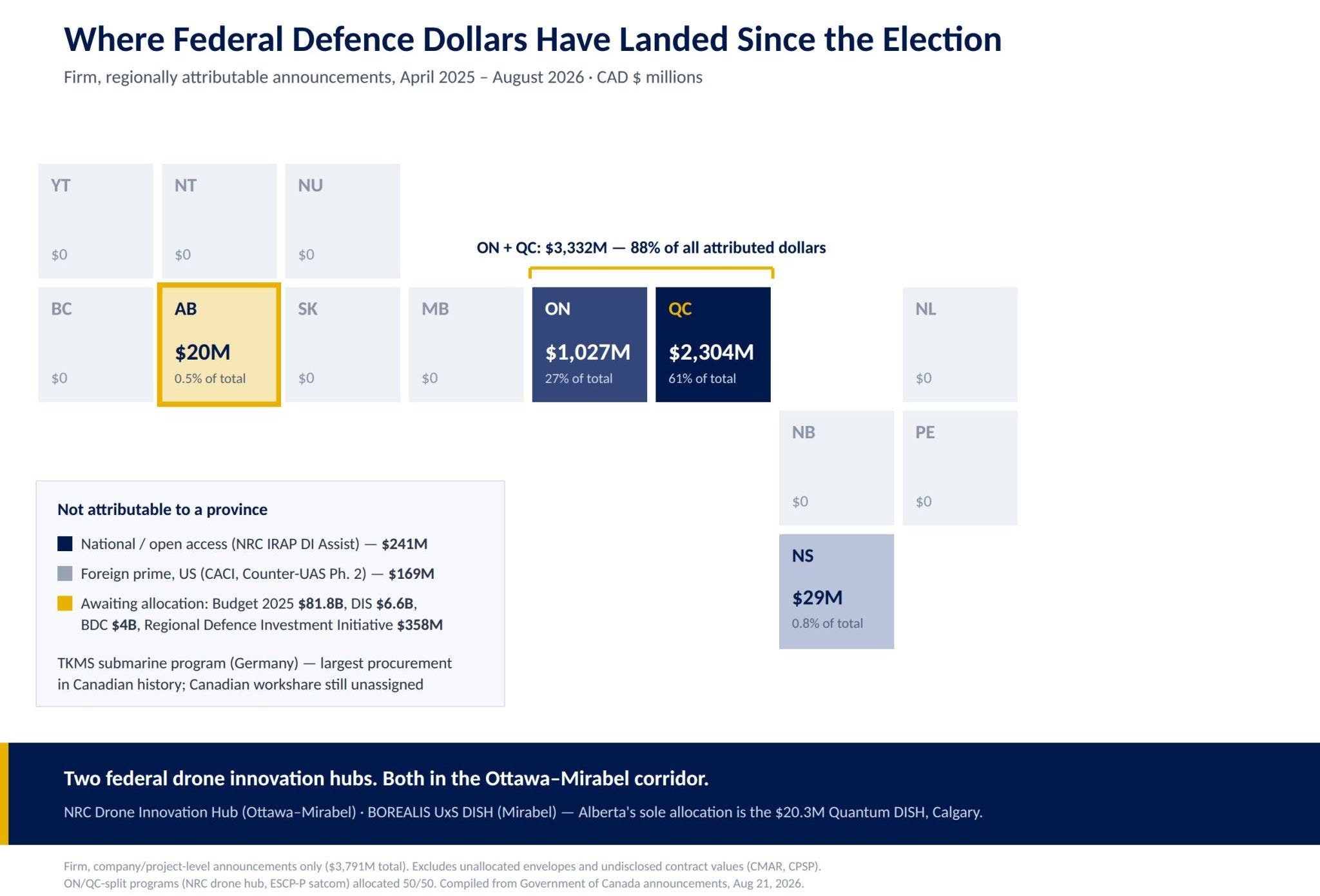
Canada wants millions of drones. PM Carney’s pledge is now contractual: six Canadian suppliers including Saskatoon’s Draganfly split up to $50 million to build drones and uncrewed ground vehicles, aiming to grow CAF drone holdings tenfold with 30% of output going straight to Ukraine’s battlefield, while General Dynamics Mission Systems-Canada pairs with Green Tech Harvest and Hamilton’s Sentinel works with Airlogix. The teacher is Ukraine, where FPV drones cost US$200 to US$1,000 against US$53,000 for the closest prior American equivalent, and where Snake Island Lab’s Sergii Vlashchenko says every corps runs its own lab: “The end-users should determine the specs of the product, not the defence contractor.”
Calian bought the training version of that lesson, partnering with Ukraine’s SkyFall, whose academy has trained more than 30,000 Ukrainian personnel in three years. The Army is pulling the same thread through MINERVA, which released six uncrewed systems challenges from the Arctic to cargo-munition drop with up to $2.5 million each via Innovative Solutions Canada.
Reality check: Fourteen Canadian companies formed CANUC to warn that Canada is becoming a country of drone subsidiaries rather than drone builders, with ARA Robotics chasing 70 to 80 percent Canadian content and Canadian UAVs’ Sean Greenwood noting that “capital flows toward certainty” while microelectronics, battery cells, permanent magnets and firmware all remain foreign. ARA’s Pascal Chiva-Bernard says the quiet part out loud: “Simply assembling products in Canada will not create a domestic supplier base that controls the design, manufacturing, and intellectual property behind critical technologies.”
Inside an elite Ukrainian drone unit: a special report
Canada didn’t join the drone industry. We helped invent it.
ADVERTISEMENT

Barrack Hill: Navigating Canada’s defence and procurement landscape with precision.
Canada’s Photonics Opportunity: A Manufacturing Advantage Hiding in Plain Sight

Photonics is a foundational technology for defence, artificial intelligence, telecommunications, advanced sensing, and quantum systems. The question is whether Canada will build on an existing advantage or allow the greatest economic benefits to accrue elsewhere.
Unlike many areas of the semiconductor industry, photonics is one of the few advanced technology sectors where Canada already possesses significant expertise, infrastructure, and industrial capability. From research institutions and fabrication facilities to globally competitive companies, Canada has many of the ingredients needed to build a stronger domestic industry.
The challenge is not discovering a Canadian advantage. The challenge is scaling it.
A technology right for Canada
Semiconductors are strategically important, but not every part of the semiconductor value chain is equally accessible. Leading-edge silicon fabrication plants require very large capital investments and constant reinvestment to remain competitive.
Photonics presents a different opportunity.
🤝 Deal Corner
🍁 BDC allocates $1B under a $6B Defence Platform. A $500 million Defence Fund (Fund of Funds) backs Canadian and allied funds in defence and dual-use, and StrongNorth (Direct Equity) increases to $500 million for early-stage direct cheques. BDC also becomes the first Canadian investor in NATO's DIANA Capital Network.
The first Defence Fund cheque went to Intrepid Growth Partners' inaugural US$525 million AI fund.
The platform named space for the first time, with StrongNorth's one disclosed deal going to Landing Zones Canada and its reusable stratospheric drones.
BetaKit reports Canadian defence investment in the first half of the year mostly dried up.


🍁 Canada’s banks put north of $320B on the table. TD’s $150B over five years, Scotiabank’s $100B, BMO’s $70B over a decade, RBCx’s $1.4B growth fund and CIBC’s $2B for defence and dual-use firms all landed within days, and all six banks including National Bank have already backed the Canada-hosted Defence, Security and Resilience Bank.
Meanwhile at the Canada Investment Summit: Sterling Energetics CEO JR Cox found his $1.3 billion Alberta explosives complex on page 60 of a 167-project deal book and talked his way into satellite events instead of meetings, with 600 jobs and one in ten local families on the payroll if it gets built. Maritime Launch's Sarah McLean pitched a $250 million Spaceport Nova Scotia expansion. Xanadu's Christian Weedbrook said from the floor that "Canada is waking up now."
While Ottawa courts $1 trillion in foreign capital, the Canadian Shield Institute asks whether the national security review process can survive the inflow it is trying to attract.
🍁 The Arctic build-out runs through Indigenous partnership. CIBC’s Jaimie Lickers, Senior Vice-President of Indigenous Markets, makes the case [VIDEO] that Canada’s defence strategy can deliver Indigenous opportunity and long-term benefit. Worth watching against this week’s other numbers: Arctic domain awareness, northern infrastructure and forward operating locations are where capital is moving.
🍁 Sterling Energetics pitches a $1.3B Alberta energetics complex. JR Cox wants nitrocellulose, high explosives and kamikaze drone components in Wetaskiwin County on a 600-person workforce, after an earlier plan on Samson Cree First Nation land collapsed when a band election went the other way. Ottawa has already pledged $355.7 million to General Dynamics’ Canadian arm for a Quebec nitrocellulose plant inside a $1.4 billion shell push: “We haven’t solved our sovereignty at all by championing projects by the primes.”


🍁 Maritime Launch seeks $250M to accelerate Spaceport Nova Scotia. Canso has a road, a pad and three sub-orbital launches, plus $200 million of federal money in March to use the site for ten years and a July deal with Germany’s Isar Aerospace targeting Canada’s first orbital launch by 2028. Canada remains the only G7 country never to reach orbit.


🍁 Canada and France agree to share space launch infrastructure. PM Carney announced the initiative in Saint-Pierre alongside French President Macron, directing both countries’ space agencies and defence departments to develop and share systems including space launch. No funding, timeline or site was disclosed. Note the geography: Saint-Pierre and Miquelon sits off Newfoundland, a few hundred kilometres from the Nova Scotia pad Maritime Launch is trying to finance.
🍁 Canada Rocket Company raises ~$22.5M and aims at Falcon 9. Incorporated in November 2025, CRC went from two people to 34 in ten months, moved into 7,400 square feet in Etobicoke and now targets 12,000 kg to low Earth orbit rather than 6,500, against roughly 1,000 kg for domestic peers. First R-2 launch is pencilled for 2032 at a cost of up to US$660 million, with 10 repatriated Canadians among the hires.

🍁 Calian partners with Ukraine’s SkyFall on drone training. Terms were not disclosed, but the target market is the CAF, the UK, NATO members and allies, built on an academy certified by Ukraine’s defence ministry with 30,000 personnel trained. Training is the fastest-monetizing piece of Canada’s drone pledge.
🍁 Scientists test new (and old) navigation systems to end GPS dependence.
North Vector Dynamics seeking heads of GR and Communications
Civilian schools are training the air force’s next generation of technicians for the first time
🍁 Allen-Vanguard collapses owing $124M against $5M in assets. PwC was appointed receiver September 1 over the Ottawa counter-IED and counter-drone maker, with $114 million owed to secured creditors. Roughly 50 staff worked across Canada and the UK as of July 28, and Vanguard notes the company spent over two years and more than 50 buyer approaches failing to find an owner.
🍁 Poland’s PGZ opens talks to make TNT in Canada. Deputy CEO Arkadiusz Bak says government-level discussions cover TNT, nitrocellulose and possibly hexogen, with Canada as the primary market and no financing or site locked in yet, roughly two years to implementation once talks close. Canada produces zero TNT today. Poland’s Nitro-Chem is doubling to 20,000 tonnes a year at home in three to four years.
European defence startups raised $2.65B in 2025.
Luke Kulik mapped $68B in capital raised by 123 private defence tech companies (with >$20M+ in funding) to every investor on record.
Shield AI in talks at a $20B-plus valuation. The Information reports the autonomy firm is negotiating a valuation of at least $20 billion.
Counter-drone and space money keeps moving. Erik Prince’s Vectus Air Defense Systems launched selling jammers, cannons and interceptors as a subscription service, with Ukrainian swarm specialist Swarmer holding 20% as founding investor and US CEO Alex Fink naming the core problem: “You have a really large cost-asymmetry right now, between how much it costs to attack a valuable site and how much it costs to defend it from that attack.” In Europe, Bulgaria’s EnduroSat is chasing a $200 million Series C barely six months after a $104 million round backed by Google Ventures and Lux Capital.
The UK weighs buying into Canada’s defence bank. Chancellor John Healey is considering a DSRB bid his predecessor rejected, at an entry price of about £870 million spread over three years for G7 members. Canada leads the bank with nine backers; Britain’s competing Multilateral Defence Mechanism has £749 million and a 2027 target.
Related: Arena Magazine documents frontier AI labs deploying $30 billion and hiring 9,000-plus forward-deployed engineers, roughly two Palantirs worth, in four months, a reminder that the services layer is where defence software margin now lives.


When it comes to defence and security, the Canada-Norway Alliance Is a Model for the Future
Jordan Freed, President and Managing Director, Kongsberg Geospatial
The visit of Norwegian Prime Minister Jonas Gahr Støre to Canada highlights a critical evolution in transatlantic relations: defence is no longer just about external diplomacy, but about deep industrial integration.
As Canada works to rebuild, rearm, and reinvest in the Canadian Armed Forces, its growing alignment with Norway offers a blueprint for how middle-power democracies can secure their sovereign interests.
Canada and Norway share far more than a North Atlantic baseline and Arctic Council seats. This partnership is anchored in a shared climate, common democratic values, and a mutual requirement to defend vast, unforgiving polar territories. From Ottawa’s tech hub to coastal waters, Norwegian-backed defence expertise—represented in Ottawa by KONGSBERG Canada—is powering Canada’s operational readiness spanning deep sea to outer space.
This isn’t theoretical cooperation. It manifests in the sensors on Canada’s Arctic and Offshore Patrol Ships, remote weapon stations deployed by the Canadian Armed Forces, and Ottawa-developed combat systems tailored for next-generation submarine initiatives like the Type 212CD. Furthermore, as subsea infrastructure vulnerabilities grow worldwide, Norway’s decades of extreme-environment innovation provide Canada with immediate, field-tested solutions for the High North.
In an increasingly unpredictable geopolitical landscape, traditional alliance rhetoric is no longer enough. Sovereignty relies on a robust industrial base and trusted supply chains. By embedding specialized, high-skilled defence engineering directly into the Canadian economy, the Canada-Norway partnership demonstrates how shared geography and operational trust can turn historical alignment into genuine, modern capability that keep Canadians, and their allies, safe.
ADVERTISEMENT

Learn more here.
⚔️ Combat Readiness
🍁 Kit for Canada. The Conservatives want the Auditor General and the Parliamentary Budget Officer to probe the GlobalEye buy, after sources said Saab’s aircraft met only a handful of air force requirements and that no competitor saw the requirements before Carney named a preferred platform at CANSEC in May. The gaps listed are not cosmetic: 360-degree radar coverage, radar range, NORAD connectivity and no in-flight refuelling for Arctic work. Saab counters that militarizing Bombardier’s Global 6500 in Canada “will create thousands of good paying jobs while strengthening Canadian sovereignty.”

🍁 Home front. Parliament’s national security committee is reviewing whether Canada can actually collect foreign intelligence, given CSIS may gather it only from inside Canada and never overseas, with a first national security strategy in over two decades now in drafting and Goran Samuel Pesic dismissing the cost excuse: “I don’t buy for one single moment that it’s too expensive. Life is expensive. Canadian interests are priceless.” The enforcement record is the argument for him. Canada sanctioned Streit Group on August 6 but not its Canadian founder Gherman Goutorov, whose armoured vehicles allegedly reached Russia’s Rosgvardia across 41 Kamaz and 38 VPK-Ural shipments between 2015 and 2022, which Queen’s professor Christian Leuprecht calls “a case study of gaps in enforcement.” And Ottawa handed more than $2 million in federal and provincial contracts, including a $50,000 Canadian Forces vehicle deal and $380,000 from ISED, to an Edmonton engineer CSIS had flagged for work on Iranian missile and jamming programs.
To spy, or not to spy: Canadian government consideration of a foreign intelligence agency, 1945–2007

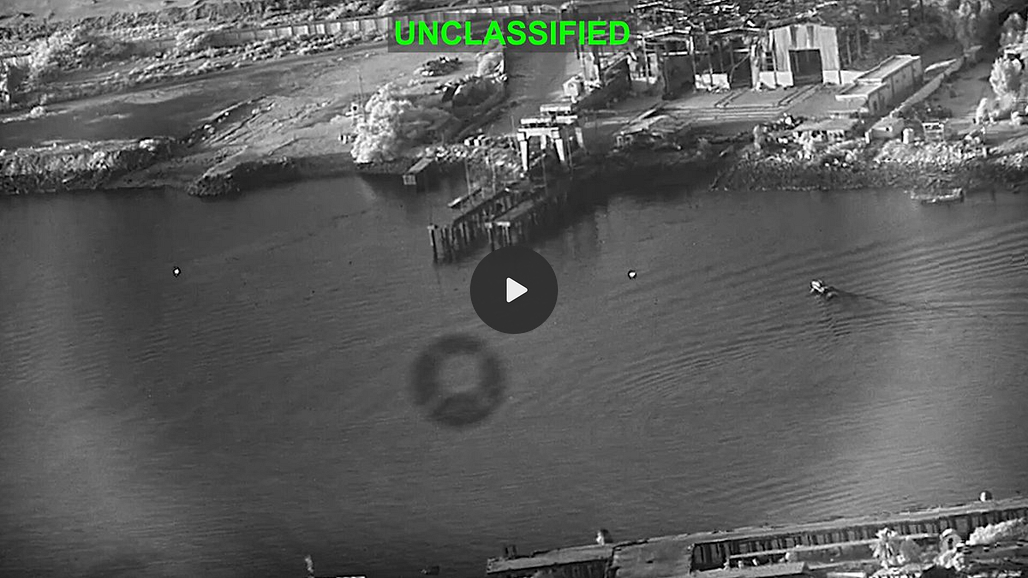
🍁 Allied friction. FBI Director Kash Patel briefly suspended cooperation with the RCMP over a CBC memo on how to describe 9/11, per the New York Times, which reported cancelled meetings around the anniversary. Commissioner Mike Duheme insists relationships stay “strong,” and CBC clarified on August 28 that direct attribution is not required to call 9/11 terrorism.

European arms production: A re-conceptualisation of the defence technological and industrial base, industrial policy and hybrid governance
🍁 Maritime autonomy. DND is buying a Canadian-designed autonomous mine countermeasures surface vessel, with the RFP for W8472-275993 to detect, locate and identify underwater mines closing October 1. Meanwhile China is building what is likely the world’s first submarine drone mothership at Hudong-Zhonghua in Shanghai, an LPD-style hull with 12 jack-up arms and a hangar for four of the 35 and 45 metre XXLUUVs already testing off Hainan, six to eight times the size of Boeing’s Orca.

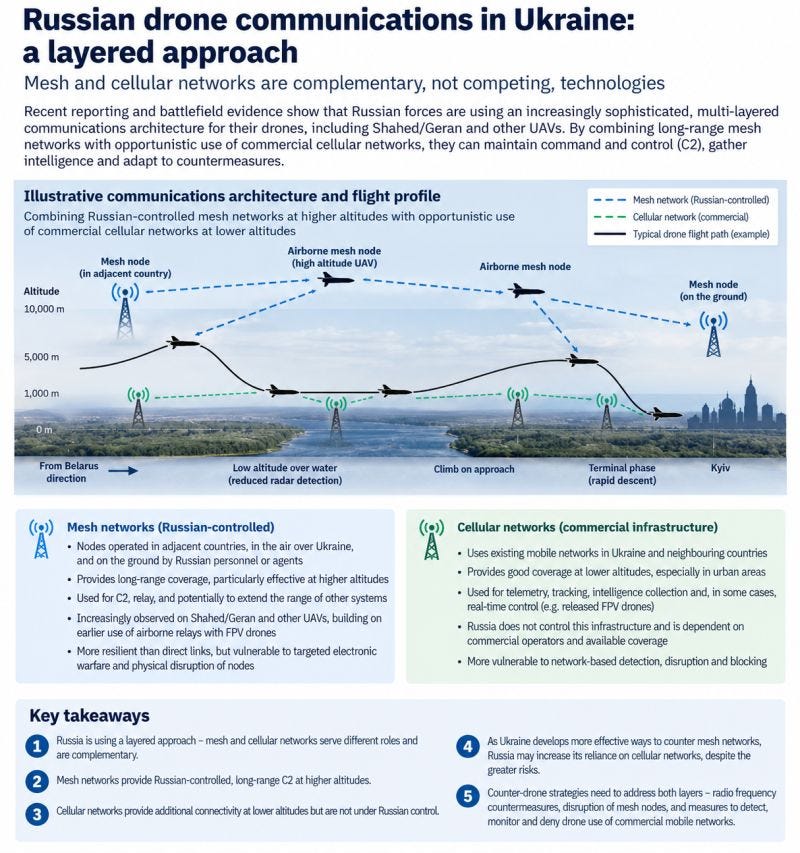
Deep strike. Russia has fitted turbojet engines to its Geran one-way attack drones, making them cheap, fast and effective at beating Ukrainian air defences, which is precisely why Petraeus lists jet-drone interceptors alongside electronic warfare and hardened distributed energy as Ukraine’s top asks. The Economist’s embed with an elite Ukrainian drone unit fills in the human layer.

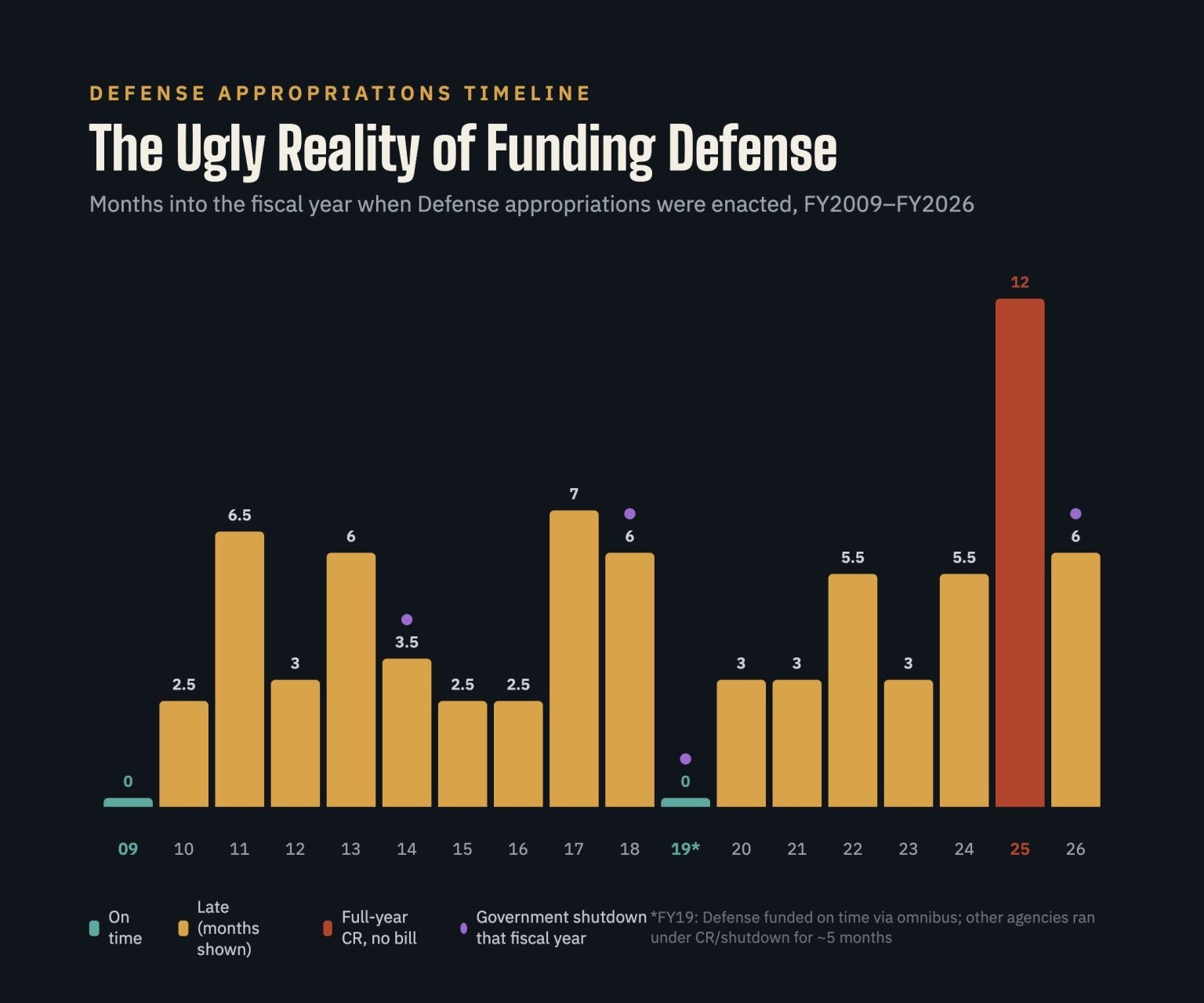
Doctrine debt. Petraeus told RUSI that unmanned systems now cause nearly 90% of Russia’s killed and wounded on the front line, that Ukraine builds around eight million drones a year, and that software refreshes weekly with hardware every few weeks. His verdict: traditional armoured manoeuvre has effectively stopped, and fixing that demands an institutional overhaul of doctrine, force structure, training, procurement and personnel on a scale beyond what he ran during the Iraq surge. Most western procurement systems measure cycle time in years. Ukraine’s measures it in weeks.
The kill zone. Ukraine now evacuates casualties by robot through a drone-saturated belt up to 20 miles deep, losing two unmanned ground vehicles for every five lives saved, with ePoints paying up to 70 for a casualty evacuation against two or three for resupply, one soldier wearing a tourniquet 33 days after six failed attempts, and under 1 percent of 1st Medical Battalion injuries coming from gunshots.
Ground robots. West Point’s Modern War Institute proposes a “Deadly Seven” family of FPV, ISR, bomber, sensor, relay, resupply and deception drones integrated from platoon to division rather than bolted on as a specialty: “Drones and sensors should not be treated as independent or specialized capabilities.”
Stockpile paradox. Allies face five-year missile waits while Lockheed Martin pours $8 billion to $9 billion into PAC-3 MSE, THAAD and PrSM capacity and grows floor space nearly 50%, and GM Defense proves a housing component can go from contract to delivery in 22 days when an automaker is pulled into the supply chain.
Cheap at scale. The Pentagon’s $1.1 billion Drone Dominance Program named 25 vendors, with 12 building 30,000 drones at $5,000 each in the first gauntlet at Fort Benning before the field narrows to five suppliers at 150,000 drones and $2,300 per unit, roughly 340,000 small UAS in two years. AUVSI’s Michael Robbins: “Competition promotes innovation, and it drives down costs, but the demand signal is clearly there.”
Axis watch. The Economist lays out the Hellscape concept of flooding the Taiwan Strait with cheap autonomous systems, where strategists now assume attackers need 20:1 or 30:1 firepower rather than 3:1, Taiwan targets 208,000 domestic attack drones and 1,320 suicide boats by 2032 and Beijing calls the plan “psychotic.” Supply chain security is the weak seam: Congress is investigating how F-35 parts including a stealth-coated canopy were rerouted from Australia and ended up in Hong Kong, on a program already missing over a million spare parts in five years per GAO and heading for almost $2 trillion in lifetime cost. Data leaks the same way: Anthropic alleges Chinese firms ran distillation at scale, including at least 300,000 real-user requests routed through Claude in 10 days and 151 million Alibaba exchanges between May and July, with police case files and PLA-linked surveillance material inside the flow.
Space. Space Force has gone public about jamming Iran during Operation Epic Fury, describing a specialist in the 42nd Electromagnetic Warfare Combat Detachment reconfiguring her weapon system and firing non-kinetically while Alarm Red sirens sounded over her site, and confirming it also holds weapons in orbit.
Europe rearms. A hospital in Ulm sits atop a 1979 bunker built to keep treating soldiers after a nuclear strike, rated for 2,000 people over 90 days and dormant for three decades, and the Bundeswehr is now weighing whether to switch it back on.
Iceland’s Laki Power charges up with €6M from NIF because electric grids are under threat.
🍁 Coalitions. Canada formally applied for full membership in the UK-led Joint Expeditionary Force, a 10-nation northern-flank rapid response group, and is negotiating a “new permanent arrangement” at CFB Suffield where London will spend $18.7 million through 2031 on its 2,700 square kilometre training area.
Big think. The Macdonald-Laurier Institute’s Richard Shimooka argues for a renewed continental compact built on North American Energy Dominance, Fortress Am-Can and a Prosperity Pact, after the bilateral trade deal failed in August, and the ask is uncomfortably direct: Canada must “deliver real improvements on defence and security, not just spending announcements, but real posture, and real capability.”
Software sovereignty. Arena Magazine argues Microsoft, Google, Meta, Anthropic and OpenAI have all quietly copied Palantir’s forward-deployed engineer model, buying or funding four ex-Palantir companies and hiring at Palantir-times-two scale, while Palantir’s own commercial arm runs near $3 billion growing 157% year over year. Set that beside an analyst whose chatbot invented a nuclear cargo and nearly triggered a boarding, and the lesson is that the deployment layer, not the model, decides whether AI is a weapon or a liability.
ADVERTISEMENT

CIBC is a proud sponsor of The Icebreaker. Connect with our team at Mailbox.Defence@cibc.com
🔫 Hot Shots
🍁 IDEaS wants minefields solved, and the clock is short. DND’s minefield breaching challenge offers up to $1 million per proposal from a $10 million pool for up to 10 projects across detection and breaching streams, with proposals due October 14 and a Canadian demonstration in Fall 2027 against 10 concurrent lanes each 4.5 metres wide and a kilometre long. TRL 2 through 9 qualifies, so early-stage teams are genuinely in scope.
🍁 MINERVA’s next industry day is at Gagetown. The 4th Artillery Regiment hosts the uncrewed aircraft deconfliction event in late September, closing a run that already put soldiers in front of builders at Valcartier and Petawawa.
🍁 North Bay now trains NATO fighter pilots. The 21,000 square foot International Tactical Training Centre opened September 17 at Jack Garland Airport, hosted Zelenskyy days earlier, trains more than 20 pilots on L-39s with the Belgian Air Force as launch NATO customer, and has $50 million committed for a second 50,000 square foot hangar plus six Leonardo M-346 trainers planned for 2029.
🍁 Read the CANUC pitch before you write your procurement strategy. BetaKit’s sovereign drone piece is the clearest statement yet of what Canadian content actually requires, down to firmware, magnets and battery cells.
Traditional procurement assumes that requirements can be fully specified at the outset and that the capability is bought once as a capital asset, then maintained. Neither assumption holds for software, autonomy, sensing, data, AI and other fast-moving technologies.
🍁 Ukraine is Canada’s fastest teacher. Canadian Affairs walks through how prototype-to-front timelines compress to weeks and fixes to 24 hours, and why Canada’s tenfold CAF drone goal depends on copying the feedback loop, not the airframe. Draganfly’s Cameron Chell credits the war fighter in the field with the real speed of innovation.
🍁 Space makes BDC’s list. SpaceQ’s read on the platform release notes Ottawa pitched investors on four Canadian space projects including Telesat’s Lightspeed, and that StrongNorth’s first disclosed deal went to stratospheric drone builder Landing Zones Canada.
McKinsey on the future of space technologies

Cyber has moved to the tanker deck. US authorities boarded at least two foreign energy tankers in the Gulf of Mexico in August after cyberattacks en route to American ports, with Iran among the suspected actors. Canada moves energy through the same shipping lanes with thinner maritime cyber oversight.
Petraeus put a number on Ukraine’s gap. His theory-of-victory essay is the clearest public accounting of the $27 billion shortfall and the Crimea isolation strategy.
There is a club for people who left the aircraft. The Wall Street Journal got inside the fraternity of ejection survivors, starting with Ron Bath’s RF-4 Phantom hitting a bird near 700 miles per hour over the Nevada desert and ending in a rain-filled ditch off a Reno runway.
Trump family-backed drone maker signs agreement with Pakistan
UK looks to ‘land drones’ to transform beleaguered Ajax fighting vehicles


The Icebreaker is written for the people building Canada’s defence technology base. Forward it to someone who needs it.